I just came across this exciting new serialized film called Tap Tap made by Zakmel Films (director Zaka, producer Melanie Reynard, director of photography Germain Jn. Luccere). The film will be subtitled soon.
There’s more information about the film on Youtube and at theFacebook site.
“We also know that our longer-term effort will not be measured in days and weeks, it will be measure in months and even years” – President Obama, speech announcing the establishment of the ClintonBush Haiti Fund, January 16th 2010
Okay, so it’s almost two years now. Let’s take a look at the long-term effort.
If anyone was in any doubt that the Haitian earthquake was going to be a goldmine for the disaster capitalists, a recent article at Counterpunch – which accounts for where the money raised for disaster relief and reconstruction ‘did and did not go’ – makes for a sobering, and frankly depressing read.
‘Two years later, over half a million people remain homeless in hundreds of informal camps, most of the tons of debris from destroyed buildings still lays where it fell, and cholera, a preventable disease, was introduced into the country and is now an epidemic killing thousands and sickening hundreds of thousands more. Haiti today looks like the earthquake happened two months ago, not two years.’
Here are some of the starker facts figures about where the money went and who was consulted about it:
33% of every dollar of US aid went to the US military
only 1% of the $3.6 billion raised by donors went to the Haitian Government
less than 1% of the $412 million in US funds allocated for infrastructure reconstruction in Haiti has been spent by USAID and the US State Department
international aid coordination meetings were not translated into Kreyol
the Haiti Neighborhood Return and Housing Reconstruction Framework drafted by the Interim Haiti Redevelopment Commission (IHRC) which was supposed to guide reconstruction, was not published in draft form in Kreyol so local people could review it
of the 1490 contracts awarded by the US government only 23 contracts went to Haitian companies
two US based private companies with strong US government connections – CHF International and Project Concern International – received an $8.6 million joint contract for debris removal in Port-au-Prince
at a meeting of governments in Montreal in January 2011 the international community decided it was not going to allow the Haiti government to direct the relief and recovery funds
an official report into the operations of the IHRC revealed that it failed to direct funding to projects prioritized by Haitians
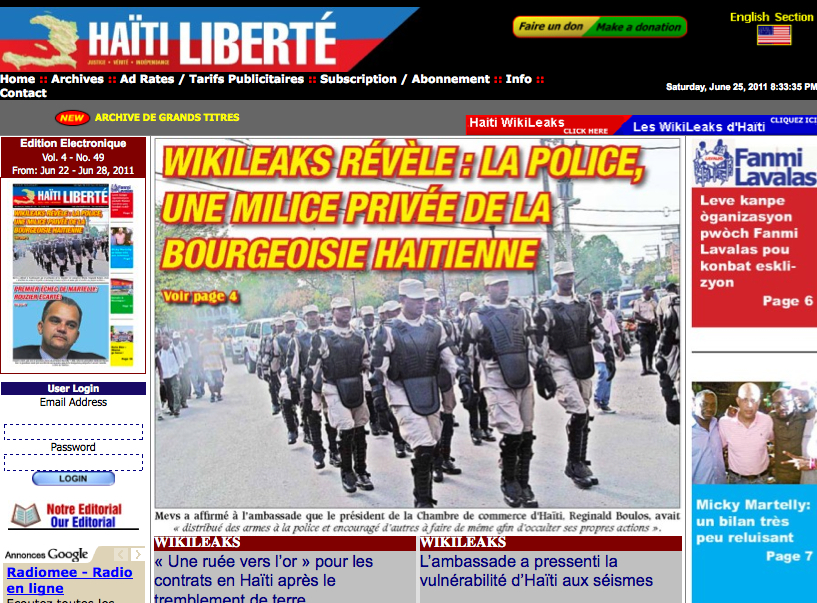
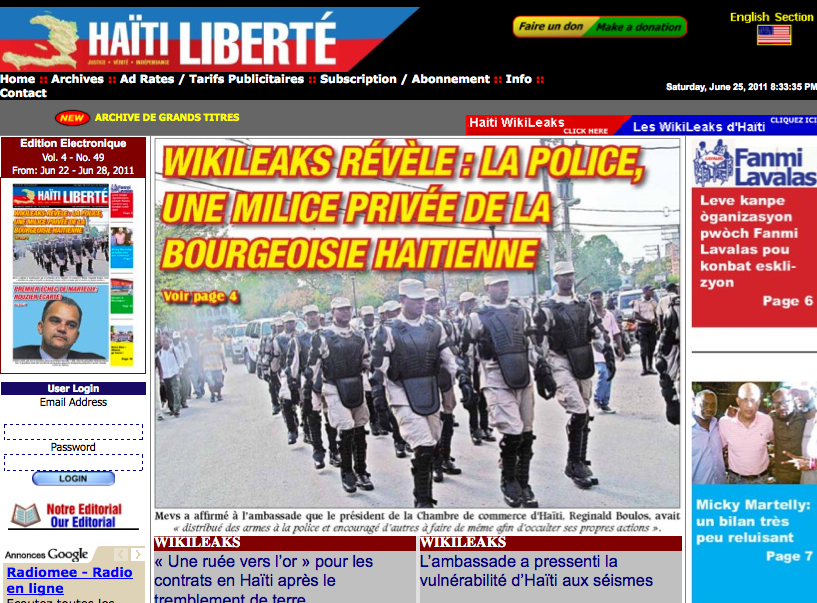
Haiti Liberte was one of the first news sources to report the disaster relief ‘goldrush’ after secret cables by U.S. Ambassador Kenneth Merten were released by wikileaks in February last year.
Here is an example of the promotional material for one of the companies that won out in the scramble for contracts after the earthquake, United for a Sustainable America:
The horror. Renzo Martens eat your heart out.
The Haiti Liberte article also reported the story of Lewis Lucke, a 27-year veteran of the US Agency for International Development (USAID) who was named US special coordinator for relief and reconstruction after the earthquake. After a few months on the job he moved to the private sector, where he could sell his contacts and connections to the highest bidder. He quickly got a $30,000-a-month (plus bonuses) contract with the Haiti Recovery Group (HRG).
‘But in December 2010, Lucke sued AshBritt and its Haitian partner, GB Group (belonging to Haiti’s richest man, Gilbert Bigio) for almost $500,000. He claimed the companies “did not pay him enough for consulting services that included hooking the contractor up with powerful people and helping to navigate government bureaucracy,” according to the Associated Press. Lucke had signed a lucrative $30,000 per month agreement with AshBritt and GB Group within eight weeks of stepping down, helping them secure $20 million in construction contracts.’
According to an article written one year after the earthquake by Jordan Flaherty Gilbert Bigio made a fortune during the corrupt Duvalier regime and was a supporter of the right-wing coup against Haitian President Aristide. According to an article on Haiti Action Net, in 2007, after having doubled his fortunes since the ousting of Aristide, Bigio began building factories secured by armed guards and UN patrols in one of the poorest areas of Port-au-Prince, Cité Soleil.
A photograph from the GB website is uncannily similar to those bought by the plantation owner in Renzo Martens’ challenging exposé of the ethical paradoxes of global aid, photojournalism and contemporary art in the moral labyrinth of humanitarian aid work in the Democratic Republic of Congo: Enjoy Poverty III.
…artistic?
‘What can we do?’…use the ‘R’ word
The Counterpunch article ends its dismal inventory of aid relief and reconstruction failures for post-earthquake Haiti with a less than inspiring proposal of what can be done.
‘The UN Special Envoy to Haiti suggests the generous instincts of people around the world must be channelled by international actors and institutions in a way that assists in the creation of a “robust public sector and a healthy private sector.” Instead of giving the money to intermediaries, funds should be directed as much as possible to Haitian public and private institutions. A “Haiti First” policy could strengthen public systems, promote accountability, and create jobs and build skills among the Haitian people.’
Most of these proposals were made by many – including the author of the current article – immediately after the earthquake. Why would they be headed any more now than then? It’s also very worrying to see the ‘R’ word used in this context. It does not bode well.
Interestingly most of these uses occurred in 2011. A few, notably with reference to Gordon Brown’s ‘robust bullying’ and ‘robust survey of deaths in Iraq’ occurred a year or so earlier.
Isn’t ‘robust’ a meaningless, jargonistic, contemporary political euphemism for pretending to be doing something significant when actually you haven’t got a clue what to do? Or is there something more sinister at work here?
I can’t help being reminded of President Obama’s first statement following the Haitian earthquake: “I have directed my administration to act with a swift, coordinated and aggressive effort, to save lives”. Aggressive effort to save lives?
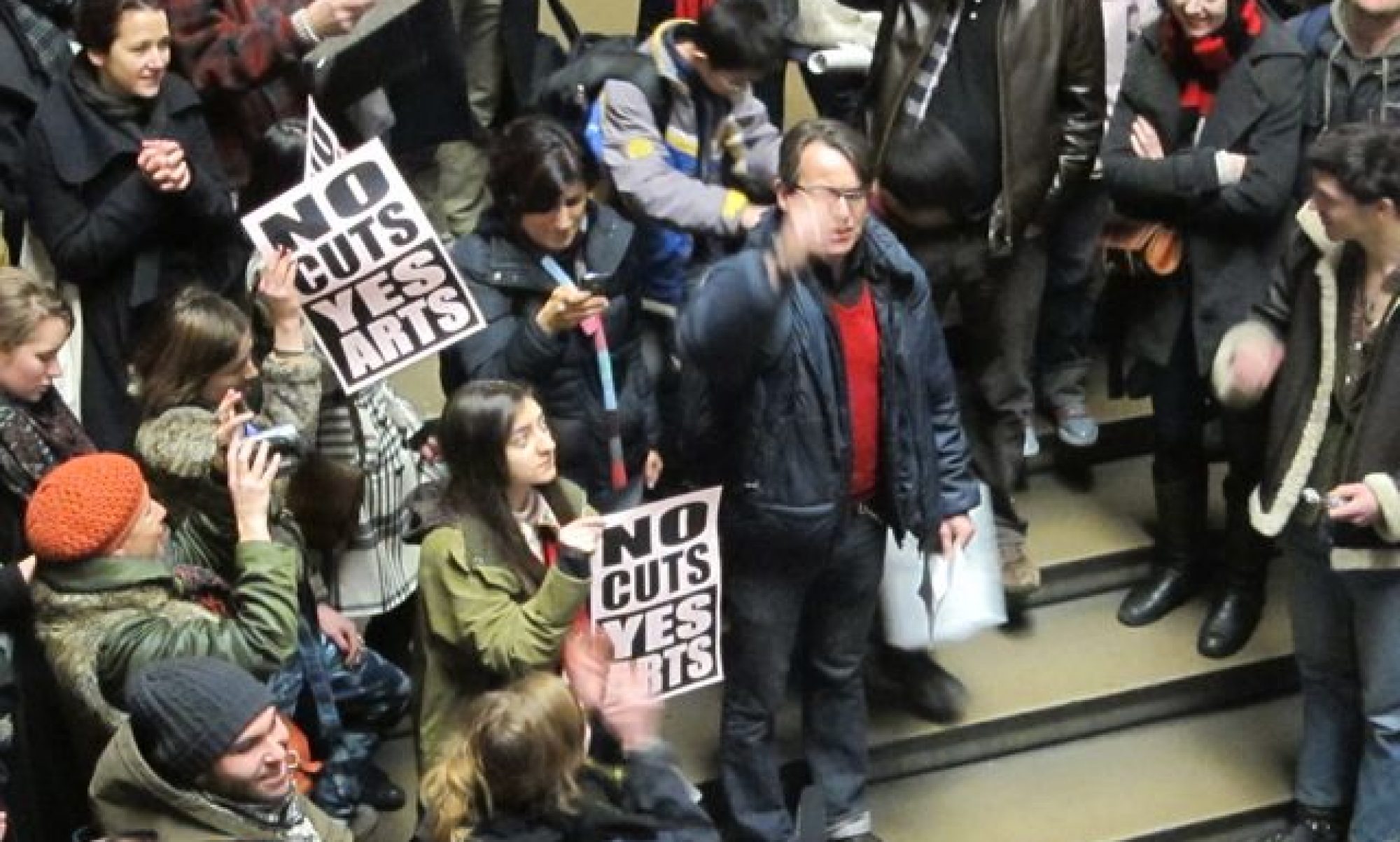
I will be discussing alternative approaches to what can be done about the situation at two events taking place at Occupy LSX next weekend. The first is an event taking place at the Bank of Ideas on Saturday January 14th about The Corporate Occupation of the Arts where I will be discussing protest pedagogy and the second an event organised by the London Occupy Economics Working Group called ‘Beyond Capitalism?’ on Sunday January 15th.
Here is the scratch edit of the video I made during this year’s Ghetto Biennale. A final, subtitled version will be screened and exhibited along with the sign itself during 2012.
I’ve decided to keep a shooting diary for the Tap-tap Painters Project I’m working on while here in Port-au-Prince. This will not be a well-formulated and carefully considered thing but something I’ll be doing first thing each morning, head and energy willing. It may not have anything to do with the painting either. Let’s see.
Comfort Inn, JFK – 10th Dec 2011
I awake from a dream after having met the first delegation from the Ghetto Biennale on a house-boat I was living on precariously with my flatmate Kelda.
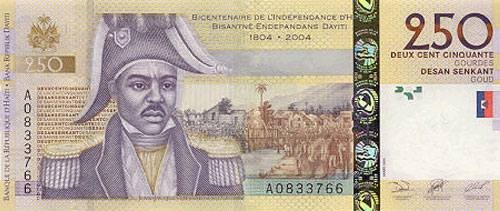
Leah introduced the group. We began to talk about what we were thinking of doing for the Biennale. The conversation moved along associational relationships between ideas and words. One such association – I think it was ‘mint’ – led to my proposing to do some research about the Haitian central bank and the minting and printing of Gourdes. One of the women in the group said that she had access to the National Mint but was reluctant to support a project around it as it could be seen as a colonialist gesture. I asked her how so? She said that Haiti’s international reputation was very much associated with its economic history and negative stereotypes about the mismanagement of its economy. I suggested that, on the contrary, by making work which looked at the practical economic and fiscal ‘realities’ of Haiti I was approaching the Haiti like any other nation currently operating within a global financial economic context. The conversation moved on.
I found myself in a low wood by the edge of the water. It’s not clear what I’m looking for but it has something to do with the ‘project’. I find a pile of used-waste DVD packages (reminiscent of the ‘Dirty Material‘ we found at La Moleya dump in 2009).
I think they may have some significance-value and start to see what they are. Nothing of much immediate meaning. I then become aware that I am in visible distance from a road along which people are walking and become very conscious of what people might think about me rummaging around in this wood, or indeed, what other people might have been doing in here before. At the same time I notice that there are multiple copies of one video, a recognition that brings a sinister affect. It is a video with the image of three Latin-American brother cowboys on the cover in white shirts and black Stetsons, a third-rate Mexican action-romance-music movie with resonances of Los Tigres del Norte and Antonio Banderas. I don’t see any title.
On the runaway at JFK airport I am thinking about some of the ideas expressed in the early essays about Kant in Nick Land’s Fanged Noumena. I notice that the drones of the plane’s engines, mixed with the cascade of voices from inside the cabin have a hypnotic and deeply reassuring affect. There is a momentary and trance-inducing choreography of machines on the runway that resonates in accord with the event of a female sparrow eating crumbs and drinking from the fountains in the airport terminal just before we departed. There are frequencies and tones that come from machinic outside, that are purely haphazard, formally, but still have the effect, in combination, of calming the ‘wild/blue beast’ (see Nick’s ‘Narcissism and dispersion in Heidegger’s Trakl Interpretation’). The material world generates healing as well as violently maddening frequencies. Nick quotes Hegel:
‘One can admire the stars because of their tranquility: but they are not of equal dignity to the concrete individual. The filling of space breaks out [ausschlägt] into endless kinds of matter; but that [i.e. the casting of the stars] is only the first outbreak [Ausschlagen] that can delight the eye. This outbreak is no more worthy of wonder than that of a rash in man, or than a swarm of flies’.
I am also reading Sybille Fischer’sModernity Disavowed: Haiti and the Cultures of Slavery in the Age of Revolution. This book and Nick’s seems to be conspiring -along with David Graeber’sDebt: The First 5000 Years (which I left in London) – in a paranoiac critical convergence of thematics. I could barely get through a paragraph of the former without the interconnections amassing and overwhelming the read. In Note 2 of her introduction – ‘Truncations of Modernity – “The Fate of Striking Events”’ – with reference to the New World’s apparent ‘limitless hunger for slaves’, Fisher refers to the same text as Graeber in Debt: Orlando Patterson’s Slavery and Social Death: A Comparative Study (1982) in which he defines slavery as “the permanent, violent domination of natally alienated and generally dishonoured persons”. (Graeber develops the theme of ‘Honour and Degradation’ in relation to debt in Chapter 7 of his book). Fisher proposes two models of slavery which have been proposed in the literature on the subject: ‘Slavery as Domination’ and ‘Slavery as Exploitation’. I recall on my last visit to Haiti the unspoken significance of de Sade for the discussions of slavery in Haiti and Nick’s reminder that power is exercised not simply or primarily in the interests of profit.
This resonates immediately with the opening paragraphs of the first essay in the collection – ‘Kant, Capital and the Prohibition of Incest’ – which in turn evokes the thought of Immanuel Wallerstein’s world systems theory as I remember it, that welfare state democracy was established to ameliorate the risk of revolution ‘at home’ while exporting the full violence of raw capitalist exploitation to the colonies and to that the British abolitionist movement was simultaneously a strategy for disciplining the British labour force.
‘The policy [of apartheid] seeks to recast the currently existing exteriority of the black population in its relation to the society that utilizes its labour into a system of geographical relations modeled on national sovereignty. The direct disenfranchisement of the subject peoples would then be re-expressed within the dominant international code of ethno-geographical (national autonomy)’.
Nick’s understanding of revolutionary insurgency as an ecstatic ‘complicity with anonymous materials’ (to use Reza Negrastani’s formulation of the same general idea) must surely have relevance too in terms of Peter Linebaugh and Marcus Rediker’s The Many-Headed Hydra; Sailors, Slaves, Commoners, and the Hidden History of Revolutionary Atlantic, a core resource for Fischer’s thesis of an unfinished and sub-altern – un-known (in Nick’s terms) – revolutionary history that could (have) taken the dominant discourse of historical modernity in another direction.
‘In response to the [Haitian] revolution [by the settlers of European descent] a cordon sanitaire was drawn around the island to interrupt the flow of information and people’.
There is a correlation here between the primary Foucauldian thesis of the ‘great confinement’ and ‘the plague city’ in Madness andCivilization/Discipline and Punish and Nick’s account of Heidegger’s retreat from the full scabrous and virulent implications of Trakl’s Ausschlag (‘outbreak’, ‘blossom’, ‘waive’ and ‘beat out’) and Aufruhr (‘turmoil’, ‘revolt’).
In an amazing passage from one of the first histories of Haiti in the English language – Captain Marcus Rainford’s A Historical Account of the Black Empire of Haiti (1805)- which Fischer uses to exemplify an early example of the ‘Haiti-as-exception’ thesis and quotes in full – the last lines leapt out:
‘The same period [the age of revolution] has witnessed a great and polished nation, not merely returning to barbarism of the earliest periods, but descending to the character of assassins and executioners; and, removing the boundaries which civilization had prescribed even to war, rendering it a wild conflict of brutes and a midnight massacre’
As the plane leaves the ground I’m thinking of Nick’s writing, his philosophy of the cosmic howl of virulent materialism and planetary trauma. I see two ovular holes in the alostratus clouds, which become the eyes of a skull, with the sun directly between them, a celestial pareiedolic neotony of death and I am reminded of the benign version of this same psychological mechanism.
Here is a recent bulletin from Democracy Now in which Dan Coughlin and Haïti Liberté editor Kim Ives discuss recent US intervention in Haiti. It includes exposes about how the Haitian elite and business class tried to use Haiti’s police force as their own private armies after the ousting of President Aristide in 2004, how the US, the EU and the UN supported recent elections in full knowledge of the unfair exclusion of the Lavalas party, and how US contractors worked aggressively with the US Embassy to block a minimum wage increase for Haitian ‘assembly zone’ workers. Amy Goodman will be chairing the conversation between Julian Assange and Slavoj Žižek which will take place in London on July 2nd. This discussion will be broadcast at Democracy Now.
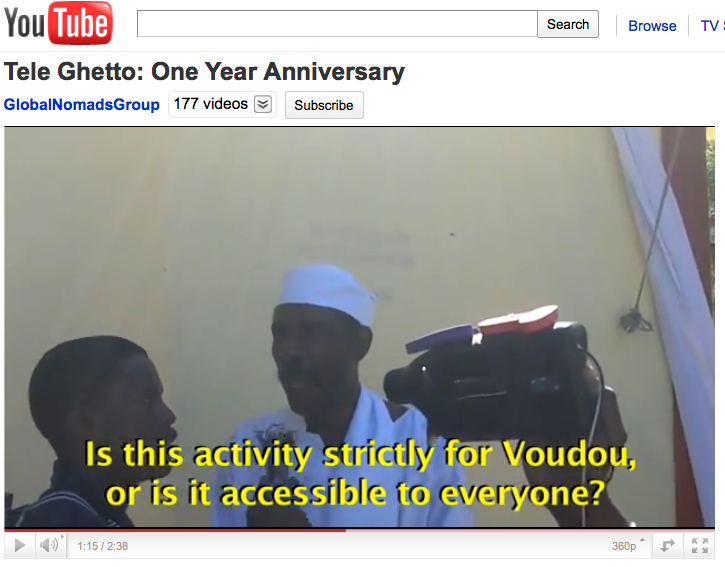
Here is an excellent video by Tele Geto interviewing a Vodou priest and Christian priest during their memorial ceremonies for the one year anniversary of the earthquake. And here is a very inspiring short film called Dandine from the Global Nomads Group. And from the same source here is a short video about Haitian Vodou which includes an interview with Max Beauvoir, the ‘Official Head of Haitian Vodou’, who makes some very pertinent comments – in terms of the general orientation of this blog- about the effects of Hollywood ‘Voodoo’ on Haitian Vodou.
For the first time in its 116 year history the Venice Biennale has a Haiti pavilion. Other countries exhibiting for the first time are the Democratic Republic of Congo, Iran, Bangladesh and Saudi Arabia.
This is quite an achievement and very interesting given that the Ghetto Biennale of 2009 was staged as a ‘Salon De Refuses for the 21st Century’ and as a ‘Critique of the Biennale Circuit’.
The achievement seems to have been in large part due to the very hard work of Daniele Geminiani who has curated the Tau Cross formation ‘Death and Fertility’ pavilion which houses sculptures by Jean Hérard Celeur (aka Celeur), Andre Eugene and Jean Claude Sentillus, all of Atis Rezistans.
It’s great to see this project come to fruition. And it certainly will generate some food for thought regarding the forthcoming 2nd Ghetto Biennale and the philosophy underpinning it.
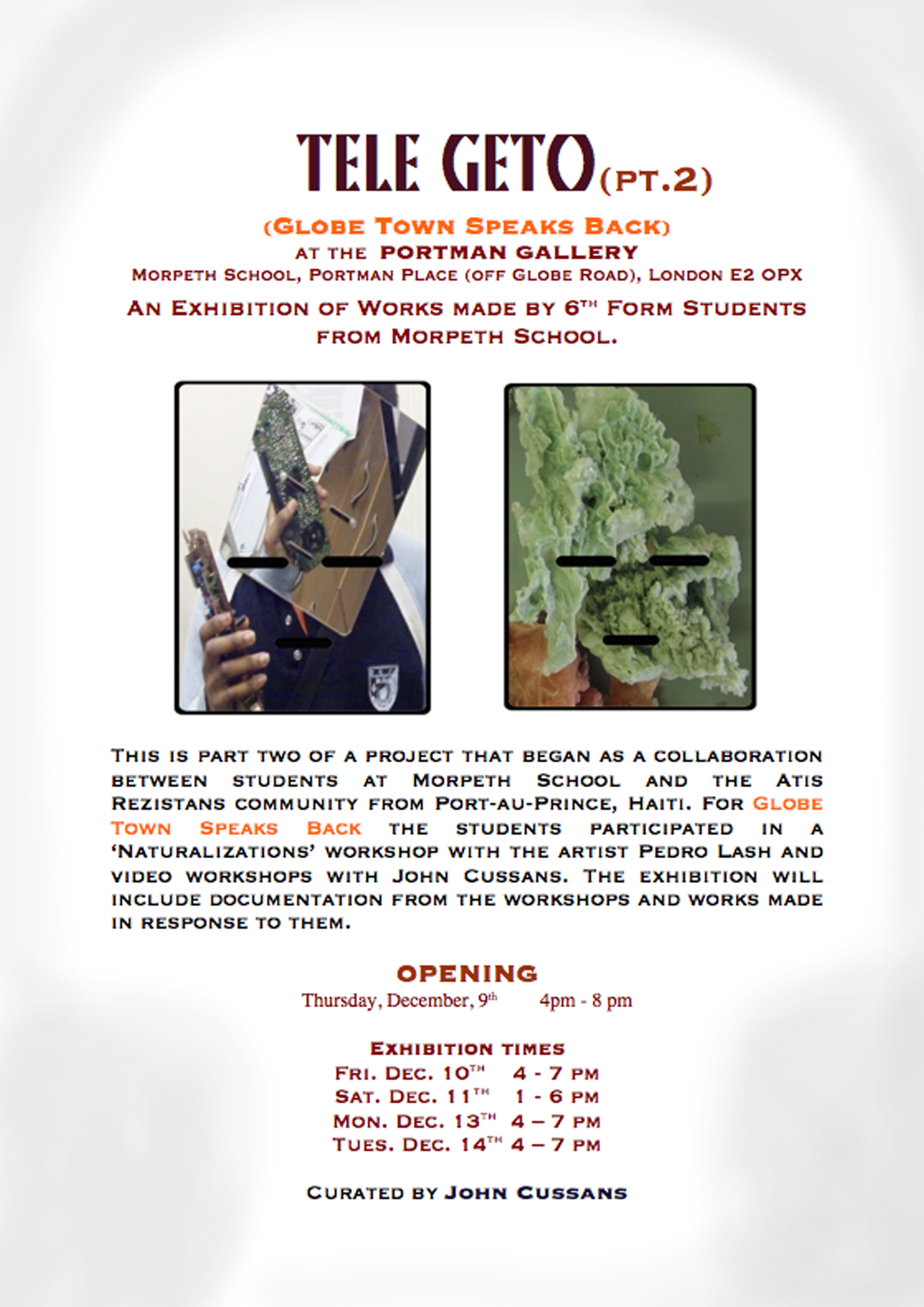
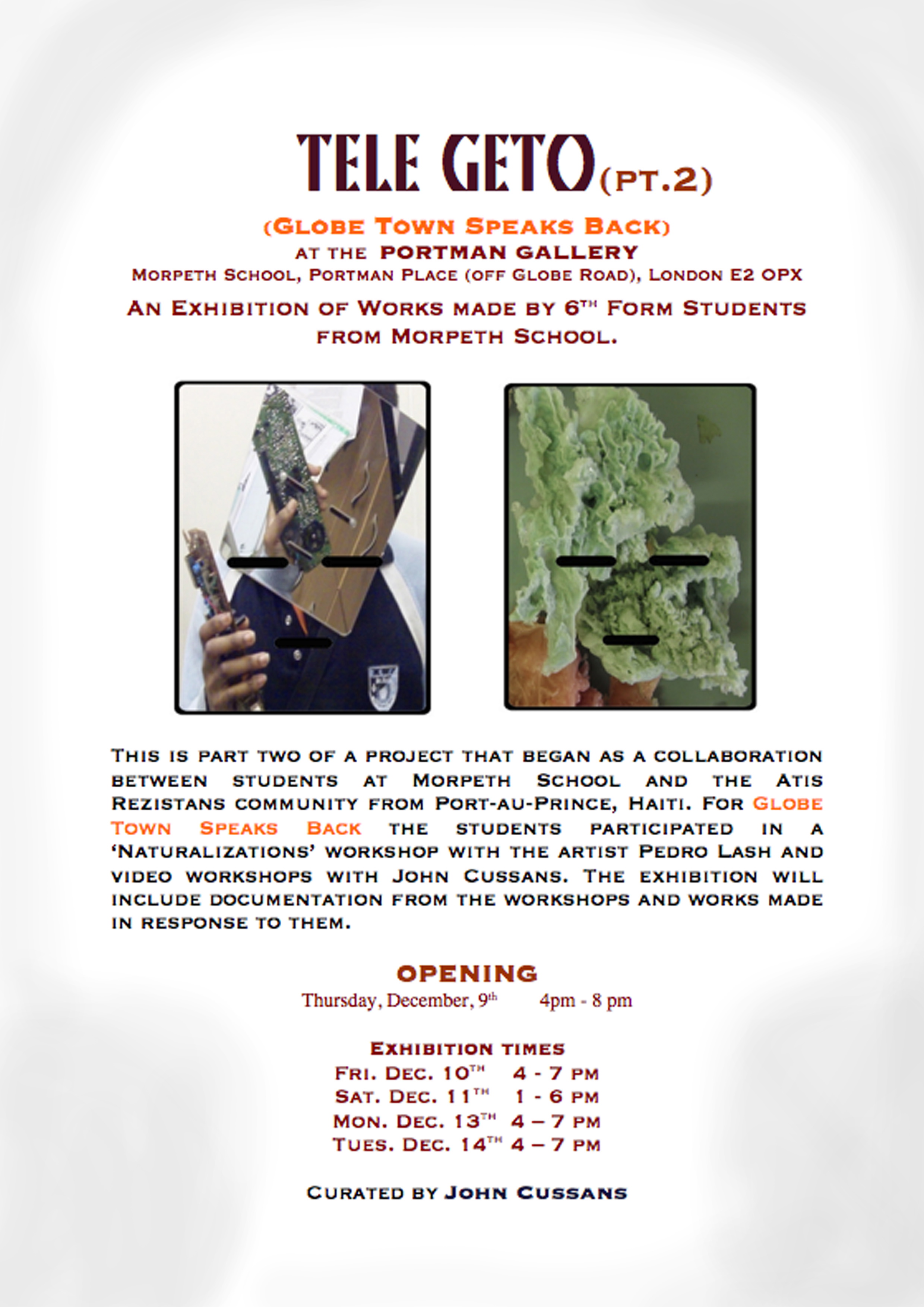
This is part two of a project that began as a collaboration between students at Morpeth School and the Atis Rezistans community from Port-au-Prince, Haiti.
The name Tele Geto derives from an artwork created by young people from the Atis Rezistans community of Grand Rue, Port-au-Prince (Ti Moun Rezistans) during the Ghetto Biennale which took place there in December 2009. Three weeks after the Biennale Haiti was devastated by a catastrophic earthquake that left hundreds of thousands of people dead and many more injured and homeless. In the wake of the disaster I sent a camera and microphone to Ti Moun Rezistans so that they could start making films about their lives after the quake which could be shown on the internet. At this same time I was approached by Andrew Cooper from the Portman Gallery to curate a show with students from Morpeth School. Continue reading “Tele Geto 2 – Globe Town Speaks Back”
A recording of the talk I gave on the subject of ‘Bataille, Haiti and Vodu‘ at The Last Tuesday Society, on Wednesday 15th September can be found here.
There seems to have been a flurry of media reports about Haiti commemorating the 6th month anniversary of the earthquake.
The general picture is one in which only a small fraction of the millions of dollars donated by the general public and charity organizations has been converted into concrete assistance for the people of Haiti. Continue reading “Haiti: Six Months Later”




 Invisible Mirrors