

Here is a short interview with me that Alexander McLean shot during the Portman Gallery “Art Power” exhibition which gives some background to the production of the show as well a little bit about Haitian history.
The Militarization of Aid
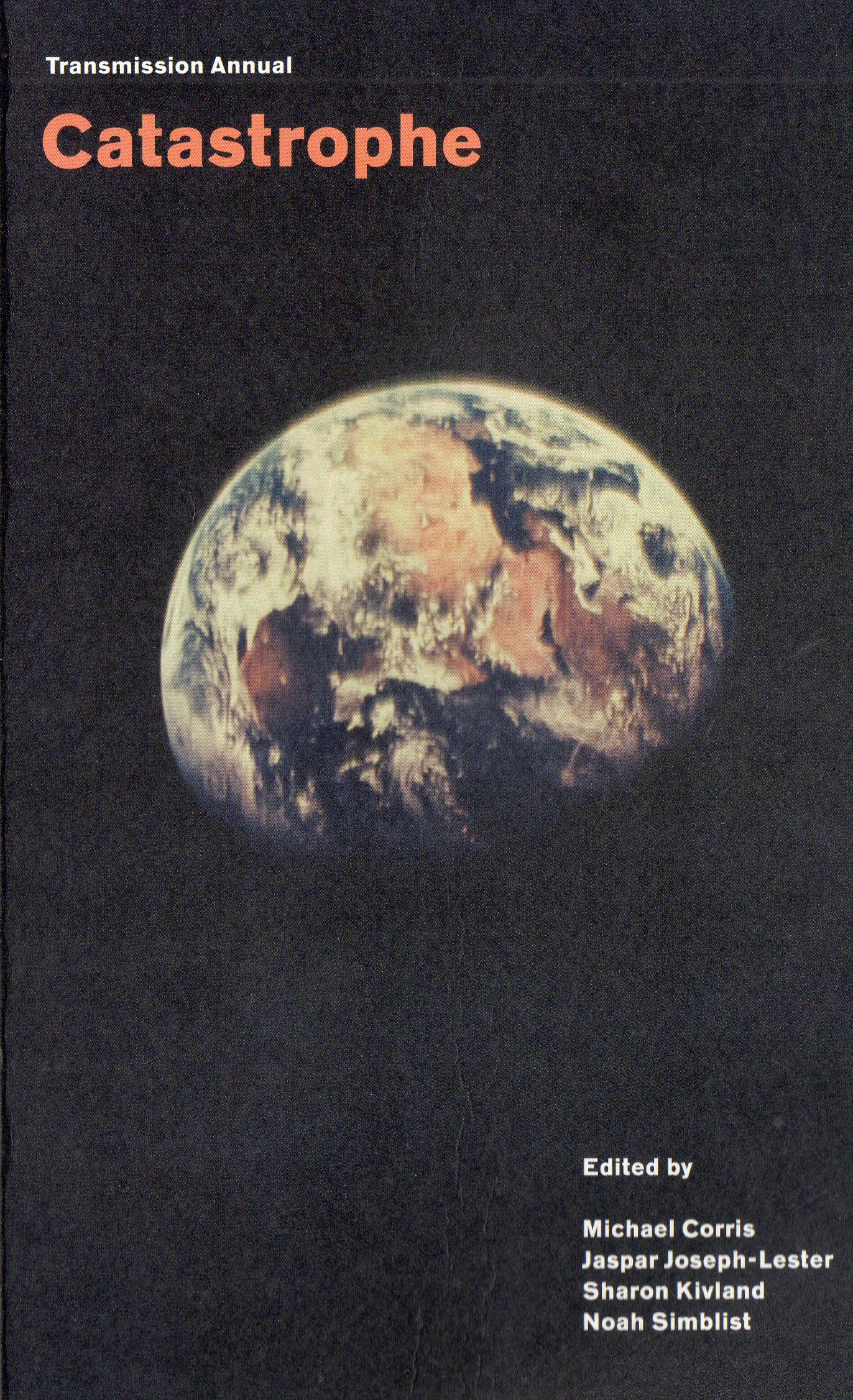
Here is a PDF of my essay ‘The Militarization of Aid as an Act of Religious Violence’ which was recently published in the Transmission Annual publication on Catastrophe. In the essay I reflect upon the militarization of aid in post-earthquake Haiti from the perspective of George Bataille’s Theory of Religion.
A Pig’s Tail
At long last Leah Gordon & Anne Parisio’s inspirational film A Pig’s Tail (1997) is up on Vimeo. Thanks for that!
There have been several references to the story of the Haitian pig here at Zombi Diaspora. It is the “same pig” that Reginald Jean Francois spoke about in his story about the 2004 defacing of the replica of the Florentine Boar by UN troops in Haiti. The story resonates very strongly with Colin Dayan’s talk at the 1804 and Its Afterlives conference discussed in the previous post, especially in terms of the competing justifications and rationales for animal slaughter/sacrifice. The description of the ceremonial welcoming of the all-new American pig to the island sounds like the kind of legal ritual she has been writing so insightfully about. It is also, on a more optimistic note, probably the ancestor the the ‘hybrid’ pig she encountered when she was last in Haiti.
Although it was “Baby Doc” Duvalier’s Tonton Macoutes who carried out the extermination program, we should note too the central role played by USAID, whose director from 1977-79, two years prior to the total eradication of the creole pig from the country, was Lawrence Harrison also mentioned by Dayan, who in the interview linked to in the previous post and elsewhere, argues for a “cultural revolution” in Haiti (and Benin) to totally eradicate Vodou from the minds of its people on the grounds that it “gets in the way of democratic governance, social justice and prosperity”. The irony of this claim is made painfully clear by the Haitian’s interviewed in Leah and Anne’s film who explain how the Haitian pig helped them put their children through school, pay for medicine, buy land or build a house. As A Pig’s Tail shows so well, the pragmatic realms of utility and mysterious realms of the sacred are not so easily separated in Haiti.
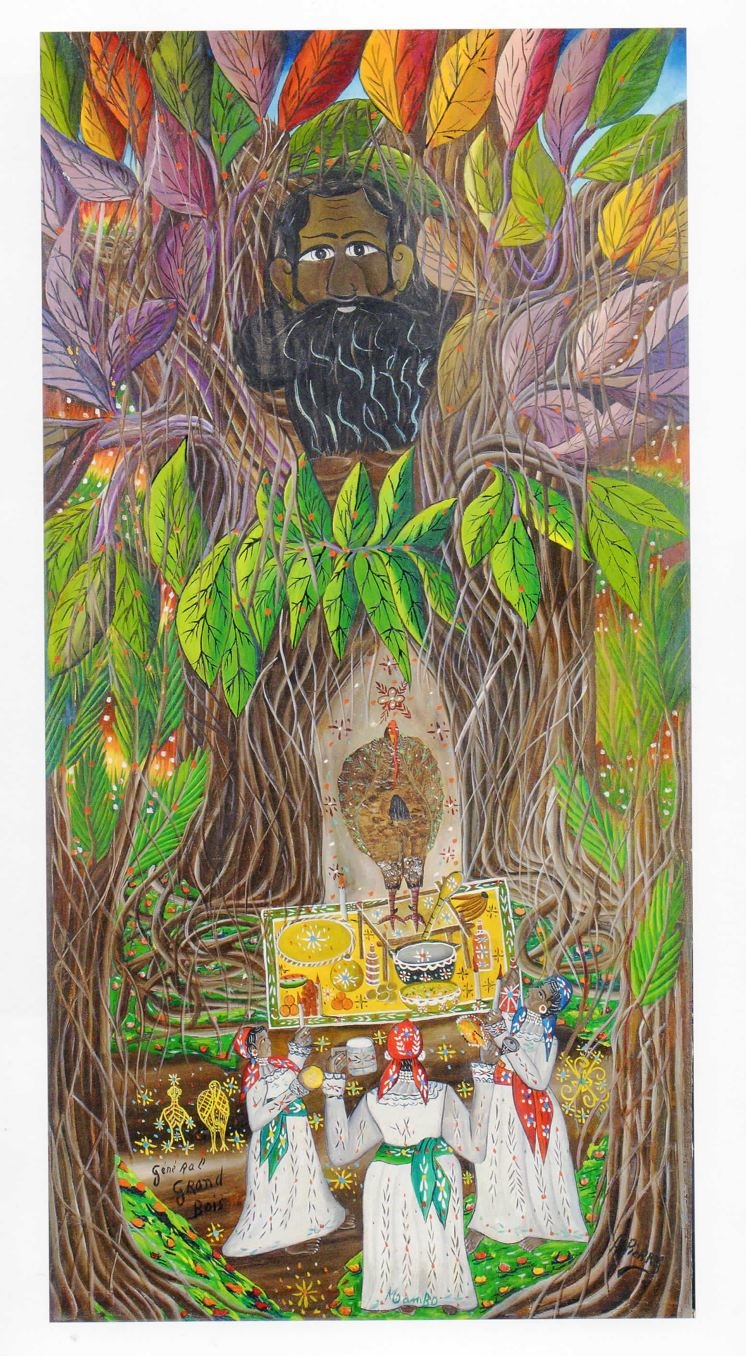
Great to see once again the meeting of Edgar Jean Louis, Vodou priest and flag-maker, and Andre Pierre, the person who taught him the way of the spirits who is one of the key painters exhibited in Kafou exhibition.
1804 and Its Afterlives (Part One)
This is the first of a three-part summary of the excellent 1804 and Its Afterlives conference that took place at Nottingham Contemporary on December 7th and 8th as part of the events programming accompanying the Kafou: Haiti, Art and Vodou exhibition. Video recordings of the sessions can be found on the above link. I will focus here only on salient points from the many inspiring talks that touch upon issues of direct relevance for the Zombi Diaspora narrative and the work of the Ghetto Biennale.
Friday 7th (Day One)
The keynote lecture – ‘The Gods in the Trunk (or Writing in a Belittered World)’ – was given by Colin Dayan, author of Haiti, History and the Gods (1995) and the recent The Law is a White Dog: How Legal Rituals Make and Unmake Persons (2011). Her talk offered “a context for reconfiguring our understanding of the supernatural…that asks: What could we feel if we could feel what we experience sufficiently?” Prompted by her knowledge and experience of Vodou practice she questions the meaning of justice, the reach of cruelty and the uses of reason within the generally decorous and polite academic discussions of ‘humanism’, ‘humanitarianism’ and ‘human rights’, in an attempt to “breach the gap between body and mind, dead and living, human and non-human”.
Her focus on the language of ‘humanism’ and ‘humanitarianism’ has bearings for earlier posts that have addressed post-earthquake disaster relief as a form of neoimperialist violence that masks and intensifies the suffering of the populations it claims to be aiding. As I have argued in a forthcoming text for the Transmission annual on Catastrophe, the militarization of aid in post-earthquake Haiti was an intensification of the strategic utilization of humanitarian aid as part of an ongoing neoliberal strategy that has been undermining the possibility of Haitian popular sovereignty since the Duvalier era. There is a kind of humanitarian wall built around Haiti that hides and prevents access to the real violence being waged there in the interests of a tiny international, capitalist elite. The systematic suppression of Vodou, despite not beginning with it, seems to intensify during periods of occupation, significantly during the US occupation of 1915 to 1934, the UN occupation beginning in 2004 and the second phase of US occupation that began after the earthquake in 2010. President Martelly’s recent repeal of Article 297 of the Haitian constitution, and the arrest of Ougan Zaza and nine other participants at the annual Bwa Kayiman ceremony this year, suggest that a renewal of the anti-Vodou program may be underway. At the same time, as Reginald Jean Francois’ account of the defacing of the Florentine boar in Plaza Italia by UN peace-keepers in 2004 suggests, there are aspects of the MINUSTAH mission that exceed ‘pure’ security and stability objectives.
Dayan began her lecture with a question – “What is the particular terrain for human cruelty and who gets to command its shifts in terms of species and race?” – which she contextualized in terms of a turn towards a “political metaphysics” of the sacred which affirms the “concreteness of Vodou practice” and attemptins to locate “in granular and theoretical registers” the “often invisible nexus of animality and human marginalization”. In a gesture evocative of the ‘surrealist ethnogapher’ Michel Leiris’ 1938 essay The Sacred in Everyday Life, Dayan proposes that “the unlikely and extraordinary are part and parcel of the commonplace” and “how rituals thought bizarre become ordinary”. She asks how we might re-figure our understandings of the supernatural to include “everyday practices of casual cruelty and commonplace harm” sketching out a landscape of that “defies reason” and “skirts transcendence”.
Dayan based her talk on Haitian novelist Marie Vieux Chauvet’s trilogy Amour, Colère, Folie (“Love, Anger, Madness”), completed and first published in 1969, but unavailable until 2009 due to fears of reprisal against Chauvet’s family by representatives of the Duvalier regime. Focussing on the final novella of the trilogy – Madness – Dayan uses Chauvet’s works to stage a series of fundamental ethical and historical questions about what we consider to be human, and what happens when the poles of magical and the juridical, supernatural and rational are ritually reversed. “Are we prepared” she asked “to re-adjust ourselves to a conception of human life that turns our own reality upside down?” Within what she calls the “precincts of Chuavet’s fiction” that exist in the nightmare landscape of Duvalier’s Haiti, “the immediate thing is the supernatural” and the real is “no more than a symbolization of events in the world of ritual”. In such circumstances “the most incorporeal is re-cast as reasonable” and this “relentless acceptance of unreality” Dayan claims is a necessary part if Haitian history and crucial to its mythology.
Dayan addresses the management of “societal refuse” in which distinctions are drawn between “the free and the bound, the familiar and the strange, the privileged and the stigmatized”. There was something very Bataillian about this formulation of “an unreal rationality of racism” depending for its power on “the conceptual force of the superfluous, what can be rendered as remnants or waste or dirt”. Given Dayan’s response to the show’s curator Alex Farquharson’s question about ‘the abject’ during the Q&A session, and her evident aversion to ready-made and over-used theoretical terms that often work to cover-over and obscure the very things they claim to be addressing, I propose this reference with some circumspection. Bataille is undoubtedly a philosopher whose concepts (like ‘formless’, ‘transgression’, ‘dépense’, ‘sovereignty’ etc.) have been used in precisely this fashion in respectable academic and artworld circles for many years now. That said, I think it is worth re-stating here the general thesis of a polarity of the sacred in which the impure elements are associated precisely with filth, waste and other forms of repellent ‘base matter’ that threaten, unsettle and destabilize those modes of “civility, consensus and rationality” upon which academic claims to decency are made. The Psychological Structure of Fascism, for instance, written in 1934, attempts to account for the role of imperative ‘pure’ forms of heterogeneity (loosely, the sacred) in the formation of Fascistic totalitarianisms, that depend upon the violent suppression and elimination of material (human, animal or otherwise) deemed unclean, abhorrent and ignoble. Bataille was concerned particularly with the affective register of sacred forces, going so far as to suggest that “the object of any affective reaction is necessarily heterogeneous”. Informed by Alexander Kojève’s lectures on Hegel which he was attending at the time of writing, he developed an idiosyncratic, psychoanalytically inflected account of the master-slave dialectic, deeply resonant with Dayan’s reading of Chauvet. According to Bataille “the heterogenous nature of the slave is akin to that of the filth in which his material situation condemns him to live” while “that of the master is formed by an act of excluding all filth: an act pure in direction but sadistic in form”.
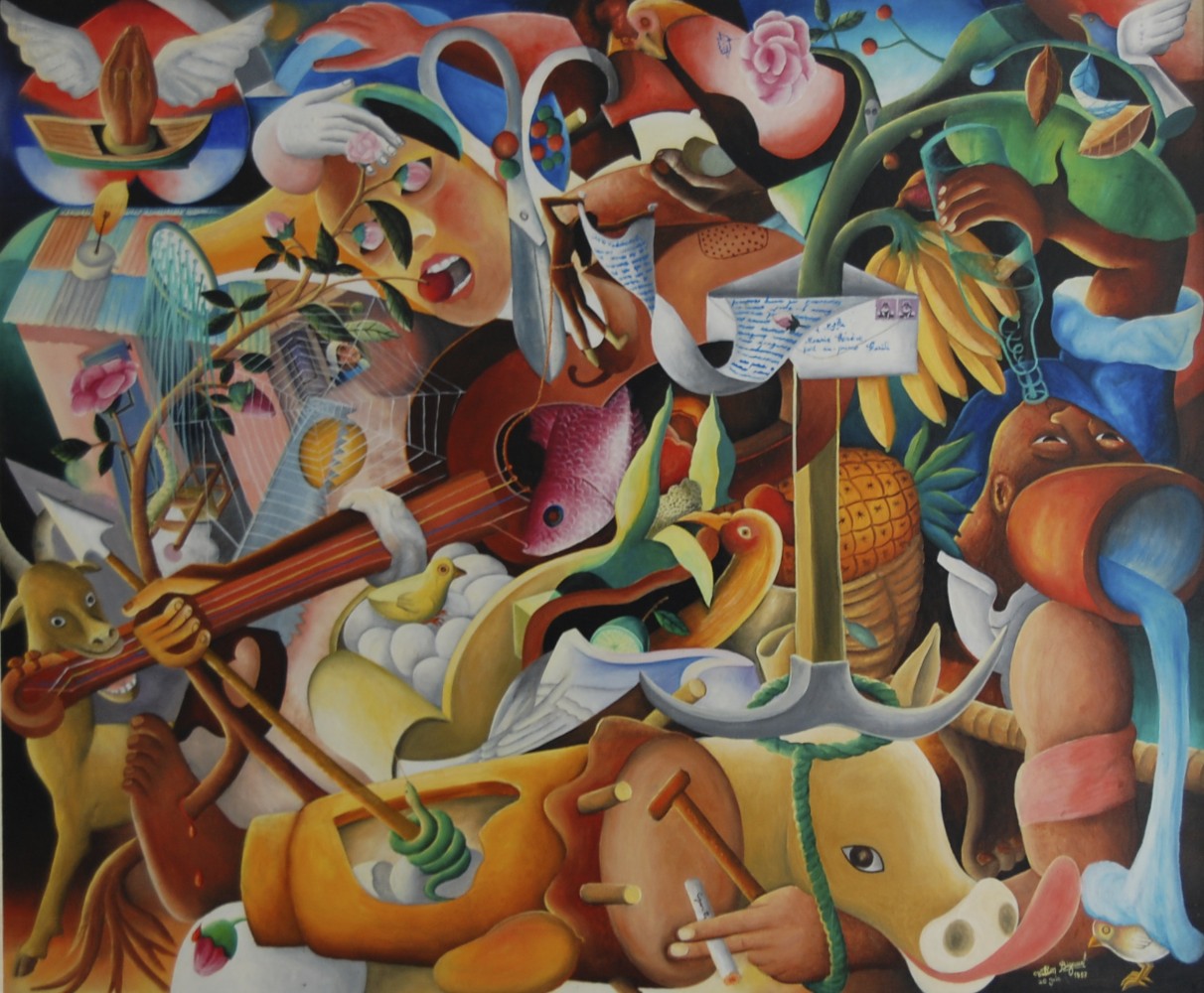
As those familiar with Bataille’s work will know, the spectacle of sacrifice and the “making of the sacred” were fundamental concerns for him, as they are for Dayan. “In the spectacles of sacrifice that concern me today” she said “to be disposable is not having the capacity to be dispossessed, to be nothing more than dispensable stuff”. With this in mind she made reference to the medieval law of the deodand, literally a “thing given up to God” symbolizing “forfeiture and power, loss and gain” and “an object or thing that becomes endowed with intent and malice and thus must be sacrificed or forfeited to the state, church or king”. Then, in a gesture which recalls the thought experiment known in consciousness studies as ‘the zombie problem’, she asked us to “imagine that this thing-like-thing returns in the shape of things that look like humans but are really evacuated of all characteristics that make social personhood possible…just at the moment that their life, their resistance is most present and visible”. For Dayan Wilson Bigaud’s portrait of a bull – Conflicts and Tensions (1957) – exhibited in the Kafou show captures what this thing-like-thing, that is so filled with spirit, might be.
Zombie Metaphor II: Video
Here’s a link to the video recording of the Zombie Metaphor talks that took place at Nottingham Contemporary on November 7th. There were some technical problems which meant the talk started a little late. The introduction begins at about 9:50.
New Fete Gede video by Alex Louis.
Here is a new video by Alex Louis from Tele Geto and Ti Moun Rezistans.
Alex is currently looking for a video arts program that he can apply for. Please let me know if you have any ideas about this.
The Tele Geto Sign Painting Video
This video was shot during the 2nd Ghetto Biennale in Port-au-Prince, Haiti in December 2011. It documents the painting of a sign I commissioned for a special Ghetto Biennale tap-tap truck, intended to promote Ti Moun Rezistans’ Tele Geto project during the event.
Humanitarian Violence 2: Night of the Celebrity Saviours
Beware, of his promise,/Believe, what I say
Before, I go forever/Be sure, of what you say
So he paints a pretty picture/And he tells you that he needs you
And he covers you with flowers/And he always keeps you dreaming
If he always keeps you dreaming/You won’t fear the lonely hours
If a day could last forever/You might like your ivory tower
But the night begins to turn your head around/ And you know you’re gonna lose more than you’ve found
Yes, the night begins to turn your head around
The Night – Frankie Valli and the Four Seasons

What if we took Jason Russell’s mission to ‘Cover the Night’ with Joseph Kony posters literally? Let’s take ‘the night’ in its poetic, metaphorical sense as a time of darkness, fear, illicit freedoms, predatory, carnal animality, ‘the dark night of the human soul’, and all that, and then imagine covering up this terrible dark space with endlessly duplicated, Warholesque pictures of a mass murderer.
Not a bad image really. Fair play to ‘em!
A recent editorial in Black Star News makes a last minute plea for Invisible Children (the organization founded by Jason Russell which produced Kony 2012) to call off it’s ‘Let’s Cover the Night’ plan. At a forum at New York University’s School of Law Victor Ochen asked how Americans would feel if some organization had decided to make Osama bin Laden famous by wearing bin Laden T-shirts and plastering the streets with posters to promote a military campaign to capture or kill him. As we well know, the US government didn’t need the pressure of a viral marketing campaign to get that job done. But this should not obscure the parallels between the mission to terminate both commands. A recent article in the Washington Post reports from the newest US military outpost in the Central African Republic where US Special Forces – Russell’s euphemistic ‘advisors’ – are already, allegedly, well on Kony’s case.
“The Americans have captured Osama bin Laden and Saddam Hussein,” a local tribal chief told the journalist “Surely they can catch Joseph Kony.”
There is, understandably, some scepticism about the US military presence in the region and the actual reasons for it. “The LRA has reappeared,” said Martin Modove, the head of the Catholic diocese in Obo. “The presence of the Americans has not changed anything. We just see the Americans driving or walking in town. We don’t see what they are doing to catch Kony.”
Oh dear. This does sound familiar. Some of you may recall the arrival of the US military in post-earthquake Haiti and how, as an Al Jazeera news report put it five days after the quake, ‘Most Haitians have seen little humanitarian aid so far. What they have seen is guns, and lots of them’. And not much has changed since then.
What we see in both the Kony 2012 mission and the militarization of aid in post-earthquake Haiti is the strategic manipulation of collective human sympathy towards the suffering of others as a pretext for US military intervention in countries with strategic and/or military-economic value. In October last year President Obama announced he would be sending US Special Forces on a ‘humanitarian mission’ to help defeat the LRA. US troops will only use their weapons in ‘self defence’ or, in what amounts to the same thing, in protection of the ‘national security of the United States’. Kony’s threat to the US has nothing to do with his treatment of child soldiers or the murder, rape and kidnap of thousands of civilians. It is being used as a moral pretext to divert attention from the real reasons for being in the region: the strategic economic value of Africa as a continent and the need to challenge China’s territorial control of the resources there. John Pilger has described this as part of a new ‘Scramble for Africa’.
In his article KONY 2012 and The “White Man’s Burden” Revisited Amii Omara-Otunnu draws parallels between the logic of the Kony 2012 mission the 19th century, overtly colonial, proto-NGO’s.
‘The European NGOs of the period, such as Christian missionaries, chartered commercial companies and geographical explorers, astutely manipulated the ignorance and sense of compassion among Westerners to evoke pity for Africans and in the process provided pretext, justification and support for European powers to intervene in the continent.’
‘The gist of the potent public relations strategy used by European NGOs in the nineteenth century was that European powers needed to intervene in the continent for humanitarian reasons. One compelling “humanitarian reason” retailed at the time was to abolish the slave trade and ameliorate its evil impact.’
‘What, of course, transpired as a result of the various campaigns by European NGOs in the nineteenth century was that European powers met in [sic] Berlin Conference from November 1884 to February 1885 to work out the ground rules for dividing up Africa among themselves, without due consideration of the interests of African peoples.’
The parallel strategies of Kony 2012 and the 19th century NGO’s include: directing attention towards the victims rather than the long-term, macro-political causes of their suffering; manipulating the ignorance, sentimentality and sense of compassion of people in the West in order to profit from the misery of Africans; giving the impression that primary agents in these missions are motivated by altruism rather than self-interest; and combining an image of a diabolical ‘inhuman’ tyrant with the suffering of Africans in general in order to justify imperialist military intervention in the country.
Such parallels may in part account for the fact that at some of the screenings of Kony 2012 in Uganda viewers pelted the screen with stones: a bizarre symbolic fulfilment of Jason Russell’s initial inspiration to go to Uganda in the first place.
CELEBRITY SALVATION
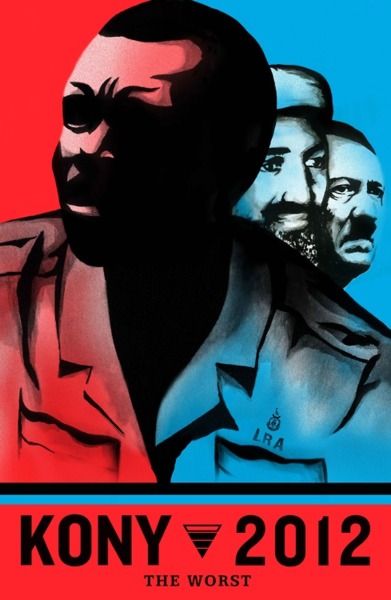
It is perhaps not surprising that Jason Russell’s thespian background would make him a big fan of the celebritariat. We could even see Kony 2012 as a sort of substitute for the genocide musical he never got to make, with his 20 ‘culture makers’ as the cast, and 12 policy makers as the backers. But there’s no more ‘waiting to be discovered’ for Jason now. There does however seem to be some dark psychology at work in Kony 2012 and the plan to ‘Make Kony Famous’. The scene where Russell tries to explain to his son the difference between the nice, good little boy – ‘just like you!’ – and the ‘evil man’ who makes little boys – ‘just like you’ – do horrible things to other little boys – ‘just like you’ – is particularly psycho. I can’t help imagining Kony’s face staring back at Russell in the mirror of his darkest dreams, the faces alternating with increasing frequency (Good Dad/Bad Dad, Good Dad/Bad Dad, Good Dad/Baghdad, Good God/Bad Dad, God Good /Dad Bad) until the face of Kony replaces his own and stares back at him, learing, Hyde-like.
Equally enjoyable in terms of this dark fantasy is the video for another of his Invisible Children projects – The Fourth Estate – a video invitation to join the new revolution. In it Kony…I mean Russell…speaks of “a new Liberty, a new Right, a Citizenship founded on the belief that all men and women in the world are created equal.”. As he speaks a faceless, silhouetted and sharply-dressed executive-type gently touches one photo on a wall of mug-shots of twenty-somethings with the their faces obscured by the word ‘Uninvited’ (Imagine the horror of not being able to take part in this world-changing fun-fest of diabolical despot terminating! Un-endurable.) In this new world, “Justice for all is not a fantasy”. Cut to the faceless deliverer of the new constitution/party invitation being chauffeured in a very expensive-looking, super-shiny-black sports-limo: “A generation that will pursue the world’s worst criminals, no matter where they hide, or who they kill, and bring them to justice. It is the future. Some of us are not ready. Most of us fear the change. Others see what could be and what is waiting to be made”. World-changing, wax-sealed letter arrives at a surprisingly skanky- looking doorway. As the letter is opened the voice tells us “The time has come for a new estate”. On August 2011 a new revolution will be mapped out. And you are invited to be part of it. Cut to shabby young man in a hoodie walking into the blinding limelight of a cinema auditorium. “You will say it all began at the Fourth Estate. Because it will’.
You shall go to the ball.
The ‘viral success’ of Kony 2012 owes much to its celebrity endorsements. As demonstrated with the immediate aftermath of the earthquake in Haiti, celebrities are quick to use the power of their fame and wealth to ‘raise awareness’ of the suffering of poor people in far off countries. A list of the top celebrity donors, the causes they give to, and – for those with strong stomachs – a catalogue of drearily predictable, sentimental slush videos can be found at Look to the Stars – The World of Charity Giving.
As George Clooney, A-list socially conscious celebrity, and one of Kony’s…I mean Russell’s…20 ‘culture makers’ put it in the video: ‘I’d like indicted war criminals to enjoy the same level of celebrity as me. That seems fair. That’s our objective. It’s to just shine a light on it’.
That Clooney and Russell apply the same theatrical metaphor of the limelight is telling here. There is, I think, a fundamental relationship, which I won’t expand any further here, between the ‘banality of sentimentality’ proposed by Teju Cole, the ‘Hello-magazine effect’ (i.e. the illusion of easy-access meritocracy generated by celebrity culture) and the popular, youthful, utopian, humanitarianism exploited by Kony 2012.
This is explicitly the case in Haiti, where US imperialism, disaster capitalism and Evangelical missions are inextricably linked. How precisely the celebrity saviour complex fits in with these processes will need to be addressed in a later post.
The White Saviour Industrial Complex would be an excellent placeholder for these themes, except that the celebritariat is not an explicitly white machine. In the case of Haiti, although Bradd Pitt and Angelina Jolie were first off the celebrity doner starting blocks – followed up by Madonna – Wyclef Jean, Oprah Winfrey and Tiger Woods were hot on their heels.
I’m not explicitly criticizing any of these individuals and their motives for wanting to raise awareness and revenue to fight for their pet humanitarian causes. What’s more interesting is how the deeper psychic mechanism of fame is mobilized for popular humanitarian causes, how this mechanism recursively endorses celebrity culture in general, perpetuates magical-thinking on the part of charity givers that their donations will actually lead to a reduction in the amount of real human suffering and diverts popular consciousness away from the real political and economic causes of that suffering.
Putting celebrity mass murderers in the limelight only casts the imperialist military-economic strategy of the US into deeper obscurity. And this is something that Evangelical Christian organizations, of the kind that Russell is personally involved in, have a fundamental role in.
Humanitarian Violence 1: Making Kony Famous
‘The banality of evil transmutes into the banality of sentimentality. The world is nothing but a problem to be solved by enthusiasm.’ – Teju Cole
I’m currently trying to compose a text arguing that the US militarization of aid following the earthquake in Haiti was an act of religious violence. Whether or not it will ever be finished remains to be seen. In the meantime, and on a related thread, a very interesting case of viral humanitarian violence is currently gaining a lot of media attention, not least since its director Jason Russell had a very public brush with insanity recently. I must admit, on seeing the author of Kony 2012 loose the plot in such a spectacular fashion, I suspected he had probably been ‘pwened’ by the man he has made it his mission to bring to justice: Joseph Kony, leader of the Lords Resistance Army. Russell is certainly messing with some serious dark spiritual matter here.
I won’t labour a critique of the film itself and the viral social media methods used to spread the mission. Teju Cole’s article The White Saviour Industrial Complex does an excellent job of that.
But I will quote a little from the film, to help frame the general thesis linking the ‘White Saviour Industrial Complex’ with the militarization of post-disaster, humanitarian aid. Here’s the voice of Jason Russell, telling us what we need to do to bring the mass murderer to justice:
“It’s hard to look back on some parts of human history [cue picture of Hitler and death camp] because when we heard about human injustice we cared, but we didn’t know what to do. Too often we did nothing. But if we’re going to change that, we have to start somewhere. So we’re starting here, with Joseph Kony. Because now we know what to do. Here it is. Ready? In order for Kony to be arrested this year the Ugandan military has to find him. In order to find him they need the technology and training to track him in the vast jungle. That’s where the American advisers come in. But in order for the American advisers to be there the US government has to deploy them. They’ve done that. But if the government doesn’t believe the people care about arresting Kony the mission will be cancelled. In order for the people to care, they have to know. And they will only know if Kony’s name is everywhere.”
So, in order to ‘Make Kony Famous’ 20 ‘culture makers’ – ‘celebrities, athletes and billionaires’ – will ‘use their power for good’ to make Kony ‘a household name’, and 12 policy makers will use their authority ‘to see Kony captured’. In other words the plan is to mobilize millions of young, optimistic, netizens, and a select group celebrities and politicians, to lobby the US government to continue and intensify the US military presence in Uganda.
‘So we’re making Kony world news by redefining the propaganda we see all day, everyday that dictates who and what we pay attention to’.
In with your Kony 2012 guerrilla marketing ‘action kit’ are two bracelets (“one for you, and one to give away”) with a unique ID which, when inputted to the net, plugs you into the ‘Make Kony Famous’ mission program and enables you to ‘geo-track your posters and track your impact in real time’.
I should have known by the bangles that there were covert metaphysical powers at work here. Those of you who attended the conference of the second ghetto biennale may recall Gail, the woman from North Carolina, who infiltrated the biennale under the pretext of accompanying her daughter to event, while she was in fact on a mission from the Iron Men’s MENistry to save the innocent souls of poor black folk by distributing bangles to the children of the Grand Rue. What is it with Evangelical Christians and bangles?
It seems to have taken none other than the brilliant Charlie Brooker to expose the secret evangelical conceit behind Jason Russell’s fame-blitz on Kony. At a recent lecture at the Christian Liberty University in the USA Russell explains how ‘the trick is not to go out into the world and say “I’m going to baptize you, I’m going to commit you, I’m going to win you over”. Your agenda is to look into the eyes, as Jesus did, and say “Who are you?And will you be my friend?”‘
The son of founders of the Christian Youth Theatre, Russell was inspired by the story of British photojournalist Dan Edlon, stoned to death by an angry mob in Somalia in 1993, to travel to Sudan with the dream of documenting a genocide in the style of Moulin Rouge, Chicago or Hairspray.
In an recent program on Democracy Now Victor Ochen, a survivor of the LRA and director of African Youth Initiative Network, explains how he showed the Kony 2012 video in Uganda to 35,000 people who had no way of seeing the film over the internet and questions both the wisdom and likely effects of the Kony fame blitz.
Today (April 20th) is ‘Cover the Night’ day, when Jason Russell’s army of fame-makers plan to blanket ‘every street in every city’ with the specially designed Shepard Fairey posters of Joseph Kony. There is still hope. Tell everyone you know.
This is contemporary global people power!
“Lets have fun while we end genocide!”
Mis-Attribution
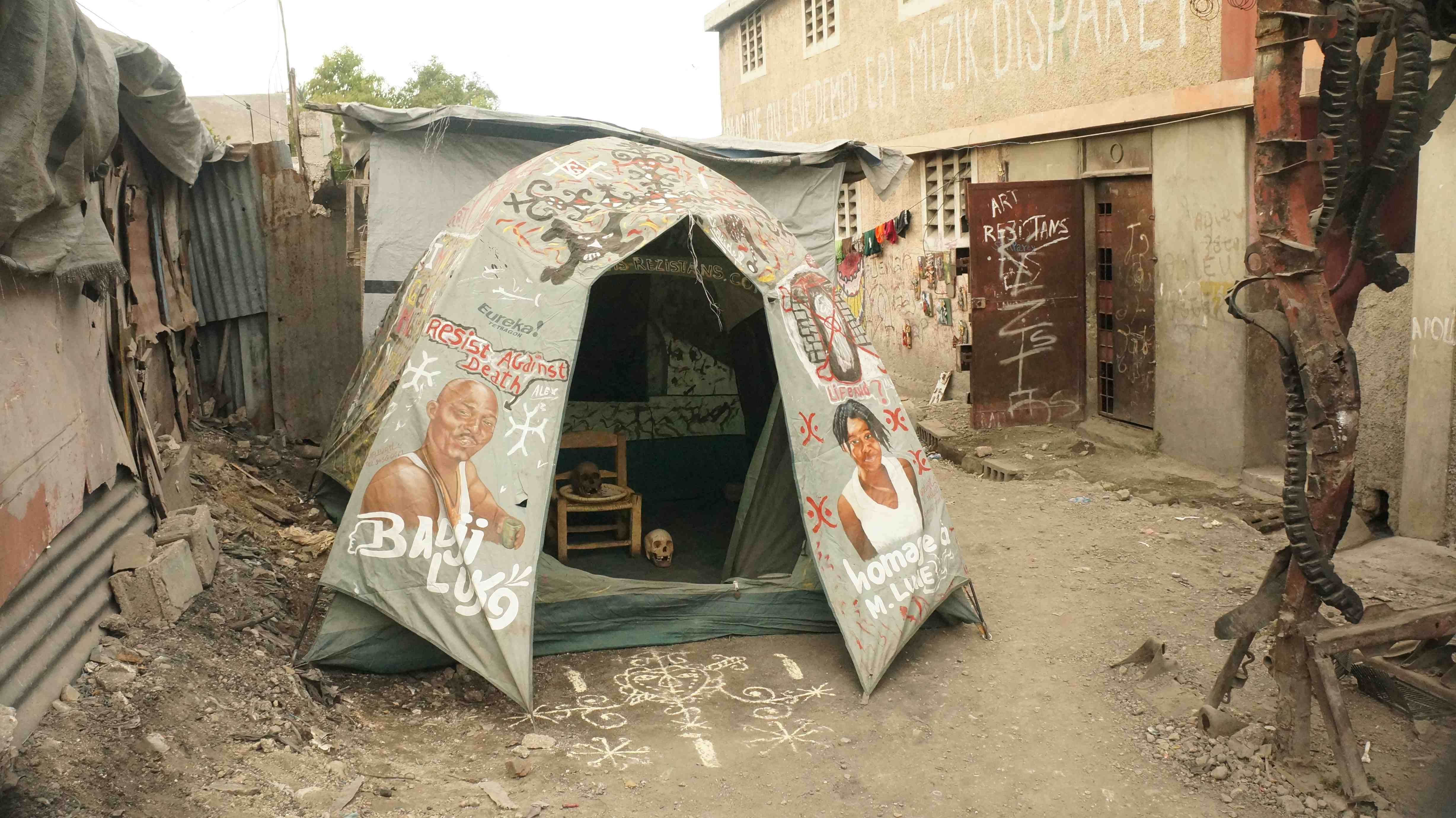
This is a short post to correct a mis-attribution of a photo of André Eugène’s ‘Badgi Pom Louko (Altar for Louko)’ (2011) to myself in Nadine Zeidler’s recent review of the biennale in Frieze. I took the photo but the work is very much Eugene’s (with contributions from Michel Lafleur, one of the tap tap sign painters). The photo is relatively high-res. The details are well-worth a closer look.
 Invisible Mirrors