
Generative AI and Arts Education: The Case of Fine Art

Here is the presentation and talk I gave at the Homo ex MachinAI conference in Athens on April 12th.

Thanks to Aspasia and Theo for all their hard work organising the conference and for inviting me to speak. Thanks also to the Benaki Museum for hosting such a timely and important debate. I will be speaking as an artist, writer and arts educator who has taught fine art studio practice and contextual studies for many years. I currently run the BA Fine Art and BA Fine Art with Psychology at the University of Worcester where I also lead the Arts and Health Research Group. I won’t be speaking about the latter today, but it informs my perspective on the impacts of generative AI tools on arts education and creativity more generally, particularly in relation to the mental and physical health effects of ubiquitous computing and on-line media environments within which generative AI developed and operates.

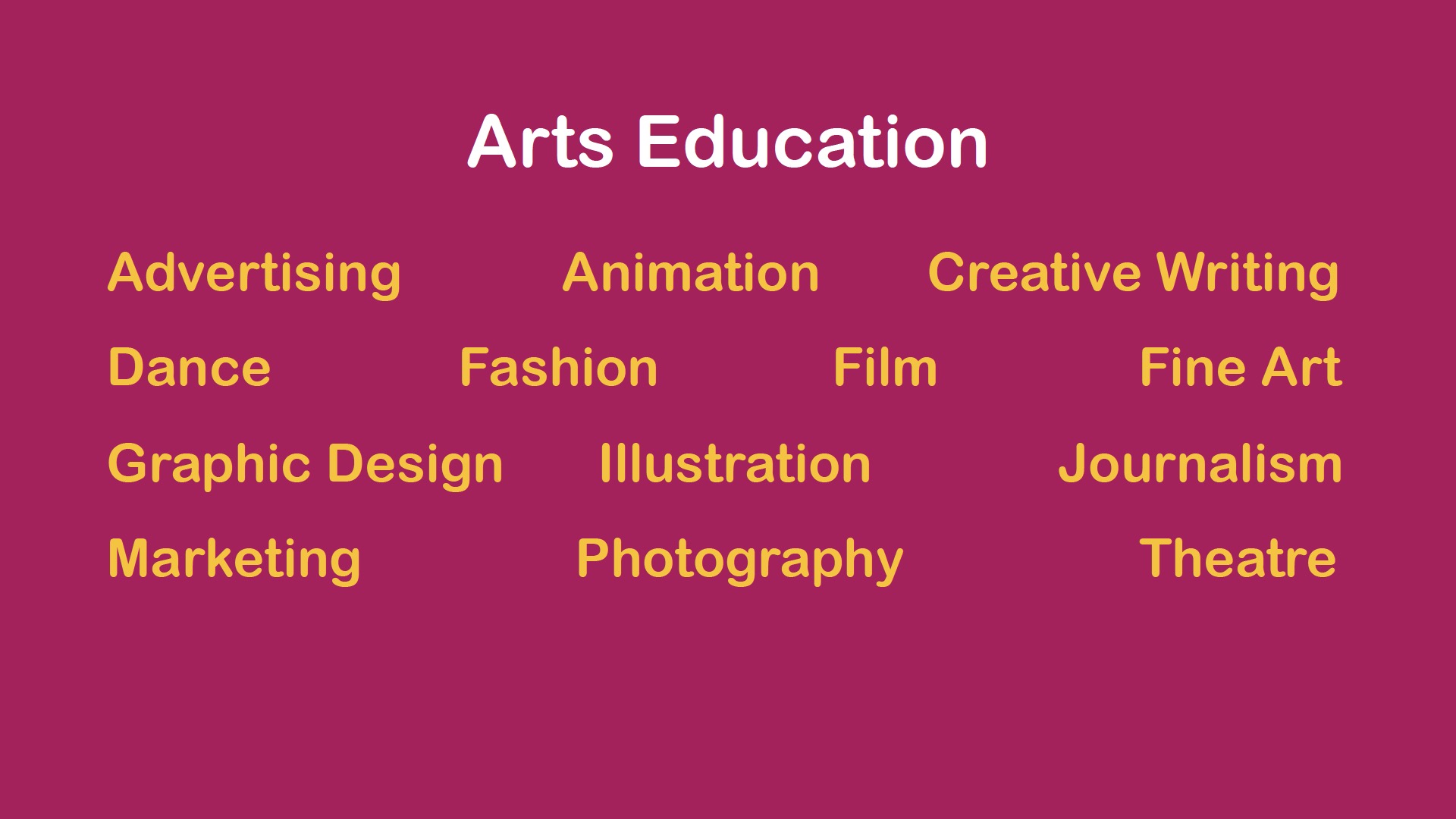
This is a list of the kinds of courses taught at a contemporary art school or university. It’s not comprehensive. It could include architecture, game art, interior and spatial design, printmaking, textiles and many others. The point is to show that ‘creativity’ is not a homogenous concept that can be generalised for all the arts. Every art has its own unique history, set of practices, understandings and outcomes. Because of this diversity, generative AI tools will not effect all teaching programs in the same way or to the same extent. Much depends on how teaching is tied to changes within the existing creative and professional fields it leads to.

Broadly speaking, teaching for professional fields already impacted by generative AI tools will be shaped most significantly. These include animation, commercial photography, film, game art, graphic design, journalism and marketing. This does not mean that learning traditional studio skills in these areas will become redundant. On the contrary, the successful artistic application of AI tools will depend on the technical experience, cultural knowledge and aesthetic discernment of its users. On the other hand, those arts more closely aligned with manual craft skills, individual authorship and the production of unique, physical artefacts made to be experienced in person, in real time and with all the senses, are less likely to be impacted as rapidly or significantly in the longer term. These include ceramics, dance, fashion, fine art, literature, performance, textiles and theatre.

The use of generative AI tools in an increasingly hybrid teaching environments, a trend amplified by the Covid lockdowns, will however be significant for all our programs. With students now regularly using AI-enhanced learning, research and writing tools, and universities moving towards AI-assisted grading and feedback systems, AI tools will play a transformative role in how teaching, administration and management in Higher Education is conducted, understood and regulated in the near future, regardless of what is being taught. I will be focussing here on my own field: Fine Art. Colleagues teaching in other areas will have their own particular stories to tell.

Continue reading “Generative AI and Arts Education: The Case of Fine Art”

Generative AI and Arts Education: The Case of Fine Art

Here is the outline for the presentation I will be giving at the Homo ex MachinAI event in Athens next week.

In this presentation I will discuss my use of generative AI tools for teaching BA Fine Art and their implications for arts education more widely.

In his influential essay ‘The Work of Art in the Age of Mechanical Reproduction’ (1935), the German art critic Walter Benjamin famously argued that the meaning and social function of art would be irrevocably transformed by photography’s erosion of the unique art object and its “aura”. Almost a century later, and despite major changes in the way art is made, discussed and experienced, contemporary fine art remains essentially a studio-based activity through which individuals versed in art history, theory and philosophy, create unique, singular artworks that are publicly experienced by humans using their full range of senses. 

Using examples from my teaching, I will argue that generative AI tools like Midjourney and ChatGPT will impact the practice and teaching of those arts more closely tied to business and screen-based media (advertising, animation, game arts, illustration, marketing, photography, etc.) more significantly than those that create unique artefacts and events based on the lived experience of individuals and groups, encountered by other humans in real space and time (dance, fine art, performance, theatre, etc.).

The peculiarly anachronistic, experiential and deeply humanistic character of fine art and fine art education, and a long history of highly-evolved philosophy and critical theory reflecting on its paradoxical nature, mean that: i) fine art is less likely to be impacted by generative AI than more commercially-orientated practices and ii) having already ridden out and survived several perceived existential threats posed by new technologies and the social environments they create, it is well-prepared for ‘the coming wave’.

Arts education and education more generally, however, are already being impacted and transformed by generative AI tools. How fine art education will fare in an environment of hybrid teaching methods, AI-enhanced personal learning tools and AI-assisted grading and feedback is another matter. 

AI/Midjourney Presentation

Below is the documentation of a presentation I gave at the ‘Challenges and Opportunities of Artificial Intelligence (AI) for Creative Educators’ event, the Art House, University of Worcester June 7th 2023, organised by my colleague Desdemona McCannon.

My talk has the rather formal title ‘Using Midjourney to Explore Relations Between Word and Image with Level 4 Fine Art Students’. Before I get to that, I take a detour through some of my PKD-related work.

DIAGRAM AS THINKING MACHINE/ART AS METAPRACTICE

Below is an edited transcript of a talk I gave at the first DRUGG (Diagram Research, Use and Generation Group) gathering at University College London on July 14th and 15th 2012.

Fred Astaire and Hermes Pan, RKO Publicity Shot (1939)

Introduction

Diagrams play a fundamental role in the art of teaching, helping people do and understand things in ways that differ from and complement other teaching methods. Diagrams can be defined as visualisations of non-apparent systems, concepts, relationships, processes and ideas. They help students to recognise and understand parallels and structural correlations between things in the world; their constitutive natures; their internal structures; relationships; the systems of which they form a part; the processes they are involved with; their own physicality and subjectivity; the coming-into-being of all of these through time and space; and theoretical explanations for these becomings.

As visual and drawn objects with a pedagogical function, one might expect diagrams and diagramming to be established institutional objects and practices in art and design education. This is however rarely the case. Although diagrams and diagramming are often used in lectures, as tutorial aids and in student notebooks, they are seldom addressed in art education on their own terms. Having taught art theory and academic writing to art and design students for many years now, I have found them increasingly useful as teaching tools, particularly for helping students see and understand relationships between philosophical concepts, art theory, art making, thinking and writing.

Later I will try to construct a practical, systematic schematisation of diagrams. But for now I will simply include ‘diagrams’, ‘analogies’, ‘allegories’, ‘maps’, ‘plans’ ‘models’, ‘schema’, ‘pictograms’ and ‘technical illustrations’ in the category of things we might conveniently describe as diagrammatic. Generally they all combine, in an ostensibly unitary form, words, pictures, lines, figures, shapes, numerals, forms, axis, grids and tables. The diagrammatic in this sense is can be characterised by the following attributes: (1) graphic visualisation, (2) an economy of graphic means that minimise extraneous information (3) a high-level of representational and conceptual abstraction, (4) the representation of non-apparent systems and relations and (5) a generally didactic purpose. Later we will see that some of the key philosophers concerned with the diagrammatic depart significantly from this signifying, purposive and didactic schematisation.

Continue reading “DIAGRAM AS THINKING MACHINE/ART AS METAPRACTICE”