International Symposium on Participatory Research in Migration, Community and Aesthetics

I will be co-chairing the International Symposium on Participatory Research in Migration, Community and Aesthetics with my colleague Dr. Azadeh Fatehrad on Tuesday June 11th at Birkbeck College, 373 Euston Road (London) from 9.15 am to 5 pm. The event is free and open to all but booking is required. You can reserve your place here.

The symposium will explore how aesthetic methodologies can intertwine with participatory research to address pressing issues in migration, community development and aesthetics. Speakers include Emily Miller from the Migration Museum, Professor Nishat Awan from University College London and Professor Lucy Orta from the Centre for Sustainable Fashion at UAL London College of Fashion (LCF).

Generative AI and Arts Education: The Case of Fine Art

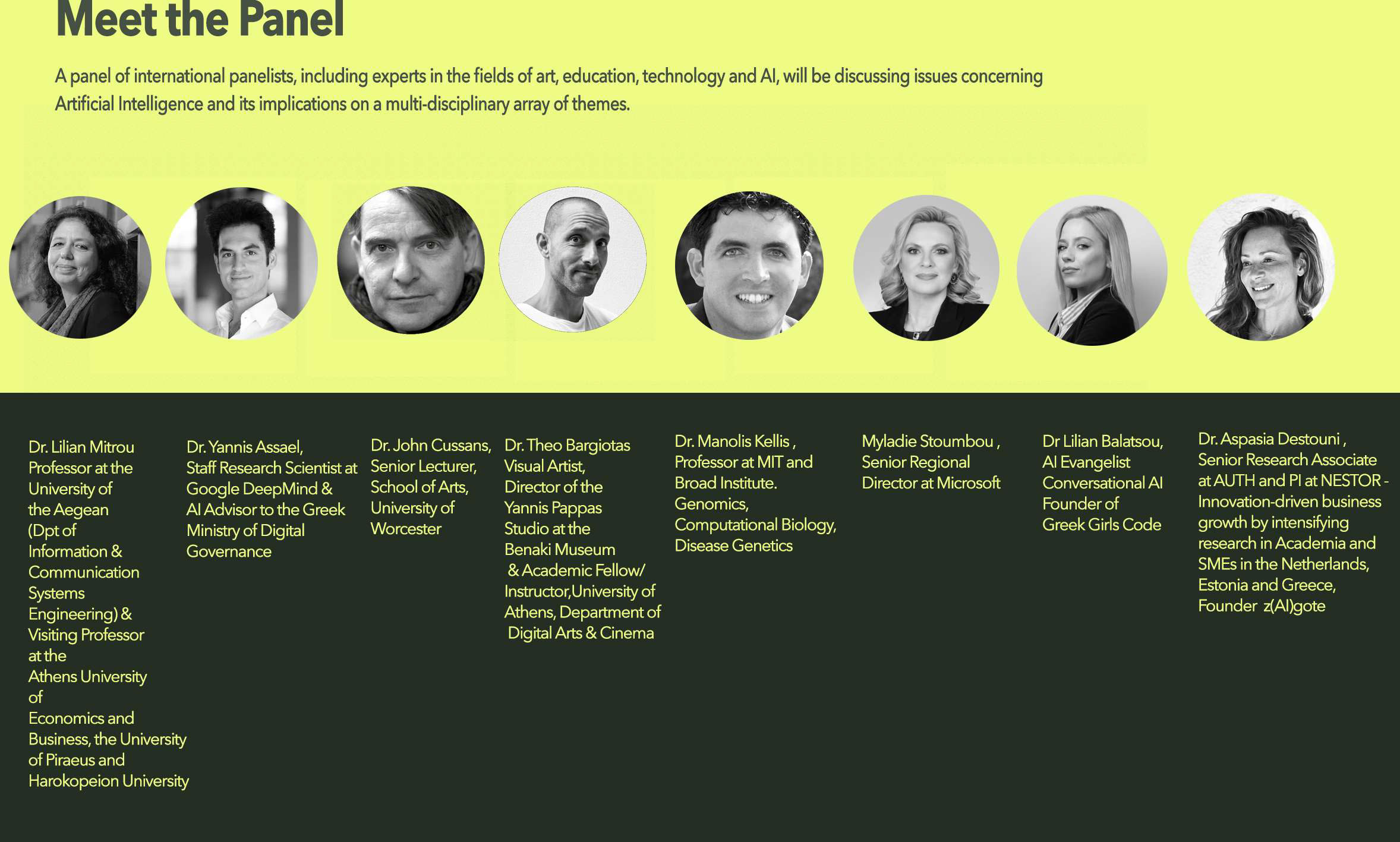
Here is the presentation and talk I gave at the Homo ex MachinAI conference in Athens on April 12th.

Thanks to Aspasia and Theo for all their hard work organising the conference and for inviting me to speak. Thanks also to the Benaki Museum for hosting such a timely and important debate. I will be speaking as an artist, writer and arts educator who has taught fine art studio practice and contextual studies for many years. I currently run the BA Fine Art and BA Fine Art with Psychology at the University of Worcester where I also lead the Arts and Health Research Group. I won’t be speaking about the latter today, but it informs my perspective on the impacts of generative AI tools on arts education and creativity more generally, particularly in relation to the mental and physical health effects of ubiquitous computing and on-line media environments within which generative AI developed and operates.

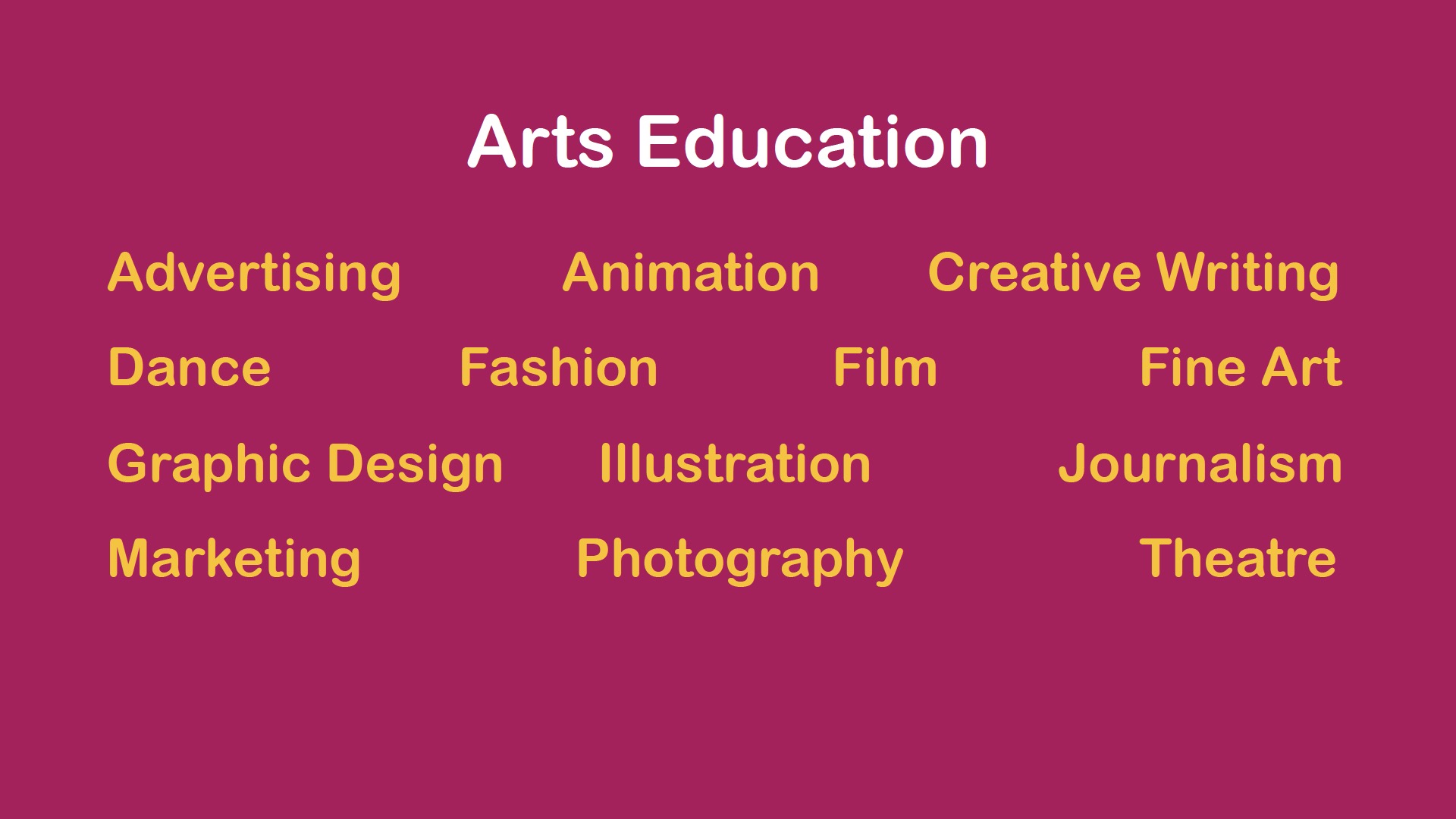
This is a list of the kinds of courses taught at a contemporary art school or university. It’s not comprehensive. It could include architecture, game art, interior and spatial design, printmaking, textiles and many others. The point is to show that ‘creativity’ is not a homogenous concept that can be generalised for all the arts. Every art has its own unique history, set of practices, understandings and outcomes. Because of this diversity, generative AI tools will not effect all teaching programs in the same way or to the same extent. Much depends on how teaching is tied to changes within the existing creative and professional fields it leads to.

Broadly speaking, teaching for professional fields already impacted by generative AI tools will be shaped most significantly. These include animation, commercial photography, film, game art, graphic design, journalism and marketing. This does not mean that learning traditional studio skills in these areas will become redundant. On the contrary, the successful artistic application of AI tools will depend on the technical experience, cultural knowledge and aesthetic discernment of its users. On the other hand, those arts more closely aligned with manual craft skills, individual authorship and the production of unique, physical artefacts made to be experienced in person, in real time and with all the senses, are less likely to be impacted as rapidly or significantly in the longer term. These include ceramics, dance, fashion, fine art, literature, performance, textiles and theatre.

The use of generative AI tools in an increasingly hybrid teaching environments, a trend amplified by the Covid lockdowns, will however be significant for all our programs. With students now regularly using AI-enhanced learning, research and writing tools, and universities moving towards AI-assisted grading and feedback systems, AI tools will play a transformative role in how teaching, administration and management in Higher Education is conducted, understood and regulated in the near future, regardless of what is being taught. I will be focussing here on my own field: Fine Art. Colleagues teaching in other areas will have their own particular stories to tell.

Continue reading “Generative AI and Arts Education: The Case of Fine Art”

Penda’s Fen at NeoAncients Festival

I will be introducing a screening of Alan Clarke and David Rudkin’s 1974 visionary, Folk Horror-tinged, TV play masterpiece Penda’s Fen on Sunday May 5th as part of the NeoAncients weekend festival in Stroud. There are lots of great events programmed. Well worth making a weekend of it. You can book tickets to the talk and screening here.

Set against the backdrop of the Malvern Hills, Penda’s Fen follows the growing pains of its adolescent protagonist Stephen as he grapples with the demons of his sexuality through the prism of his love for the music of Edward Elgar, his vicar father’s Manichaean philosophy and the spirit of King Penda, the last pagan king in England.

I will be introducing some of the interwoven motifs through which Stephen comes to decipher the mystery of his true nature: burial/un-burial, the Sleeping King and the Eternal Flame. 

BC Time-Slip 1: Flight

[This is the first section of my novelisation of Philip K. Dick’s visit to Vancouver in 1972 written in the style of the author.]

 “Would you like a cold beverage Mr Dick?” the voice asked.

From the depths of his Luminal slumber Phil Dick adjusted his vision to focus on the figure standing before him. She seemed familiar, as people you’ve never met before do in dreams. Early 20’s, about 5” 4’, dark hair tucked neatly inside a cap that matched her grey uniform.

“Erm….yes please. Bourbon on the rocks.”

“Certainly Mr Dick. Your drink will be with you in a moment” the woman beamed before shimmering out of view.

Where am I he thought? In the distance, beneath snow-capped mountains, he saw a glimmering white city of high-rise apartments hovering over a vast river that flowed into to the sea. To his left, where a forest of pines met the water, the sand gradually transformed itself into great boulders. He could hear the sound of waves gently lapping the shore and the cry of distant seagulls. To his right a crow bobbed about on one of the many logs that lay on the empty beach.

The words ‘DRINK READY’ flashed into his field of vision. He instantly recognised the familiar notification ping of Freegle, the giant tele-computing company that now controlled almost all the virtual entertainment and personalised data services on the planet. Forcing his eyes to the very upper left he clocked the tell-tale company logo that confirmed he was inside one of their Virtual World packages.

His hands moved nervously as they reached for the device that covered his face.

Until recently removing the Freegle vid goggles had been as automatic as turning off the ignition of a car. But over the last few months the Freegle logo had been appearing in his dreams, especially the most terrifying ones. Then, instead of returning him to the predicable certainties of waking life, clicking on the icon delivered him to a deeper level of nightmare running parallel to it.

Taking a deep breath he lifted the goggles slowly and looked around.

He was on a flight. The passengers around him were either asleep, wearing their goggles or both. All the window screens were drawn but here and there shafts of daylight broke through beneath them. Slowly it came back to him.

He was on his way to Vancouver to be guest of honour at a major science fiction convention. The invitation had arrived six weeks ago and could not have come at a better time. Life in California Free State was a living hell. His home in Marin County had become a half-way house for runaway teenagers, local drug users, their dealers and male in-laws, thrown out by their wives. Phil had welcomed them into his home with open arms. The make-shift community misfits loved listening to Phil’s crack-pot theories about life, death and politics and he adored their adulation. They spent their hours, days, weeks high on weed and blitzed on speed while Phil Indulged them with his peerless collection of classical music recordings. Maybe they would fill the void left when his fourth wife Nancy walked out with their daughter two years ago. His sort-of girlfriend Donna, a teenage biker chic who he believed could save the world, baled on him at the last minute and he had boarded the plane despairing and alone. By the time he found his seat the barbs he’d downed in the waiting area had begun to take effect.

Breathing a sigh of deep relief he sunk back into the reassuring solidity of the business class seat the organisers had paid for.

Continue reading “BC Time-Slip 1: Flight”

Generative AI and Arts Education: The Case of Fine Art

Here is the outline for the presentation I will be giving at the Homo ex MachinAI event in Athens next week.

In this presentation I will discuss my use of generative AI tools for teaching BA Fine Art and their implications for arts education more widely.

In his influential essay ‘The Work of Art in the Age of Mechanical Reproduction’ (1935), the German art critic Walter Benjamin famously argued that the meaning and social function of art would be irrevocably transformed by photography’s erosion of the unique art object and its “aura”. Almost a century later, and despite major changes in the way art is made, discussed and experienced, contemporary fine art remains essentially a studio-based activity through which individuals versed in art history, theory and philosophy, create unique, singular artworks that are publicly experienced by humans using their full range of senses. 

Using examples from my teaching, I will argue that generative AI tools like Midjourney and ChatGPT will impact the practice and teaching of those arts more closely tied to business and screen-based media (advertising, animation, game arts, illustration, marketing, photography, etc.) more significantly than those that create unique artefacts and events based on the lived experience of individuals and groups, encountered by other humans in real space and time (dance, fine art, performance, theatre, etc.).

The peculiarly anachronistic, experiential and deeply humanistic character of fine art and fine art education, and a long history of highly-evolved philosophy and critical theory reflecting on its paradoxical nature, mean that: i) fine art is less likely to be impacted by generative AI than more commercially-orientated practices and ii) having already ridden out and survived several perceived existential threats posed by new technologies and the social environments they create, it is well-prepared for ‘the coming wave’.

Arts education and education more generally, however, are already being impacted and transformed by generative AI tools. How fine art education will fare in an environment of hybrid teaching methods, AI-enhanced personal learning tools and AI-assisted grading and feedback is another matter. 

Therapeutic Landscapes: Program and Registration

The two-day program of talks and performances for the Therapeutic Landscapes: Ritual, Folklore and Wellbeing event at the University of Worcester on March 9th and 10th in now viewable here. There will also be an exhibition of artworks and video accompanying the event. The waged price for both days is £90, the concession price £30. You can purchase your tickets here. For more information about the panels and exhibitions check the Folk Cultures Instagram feed

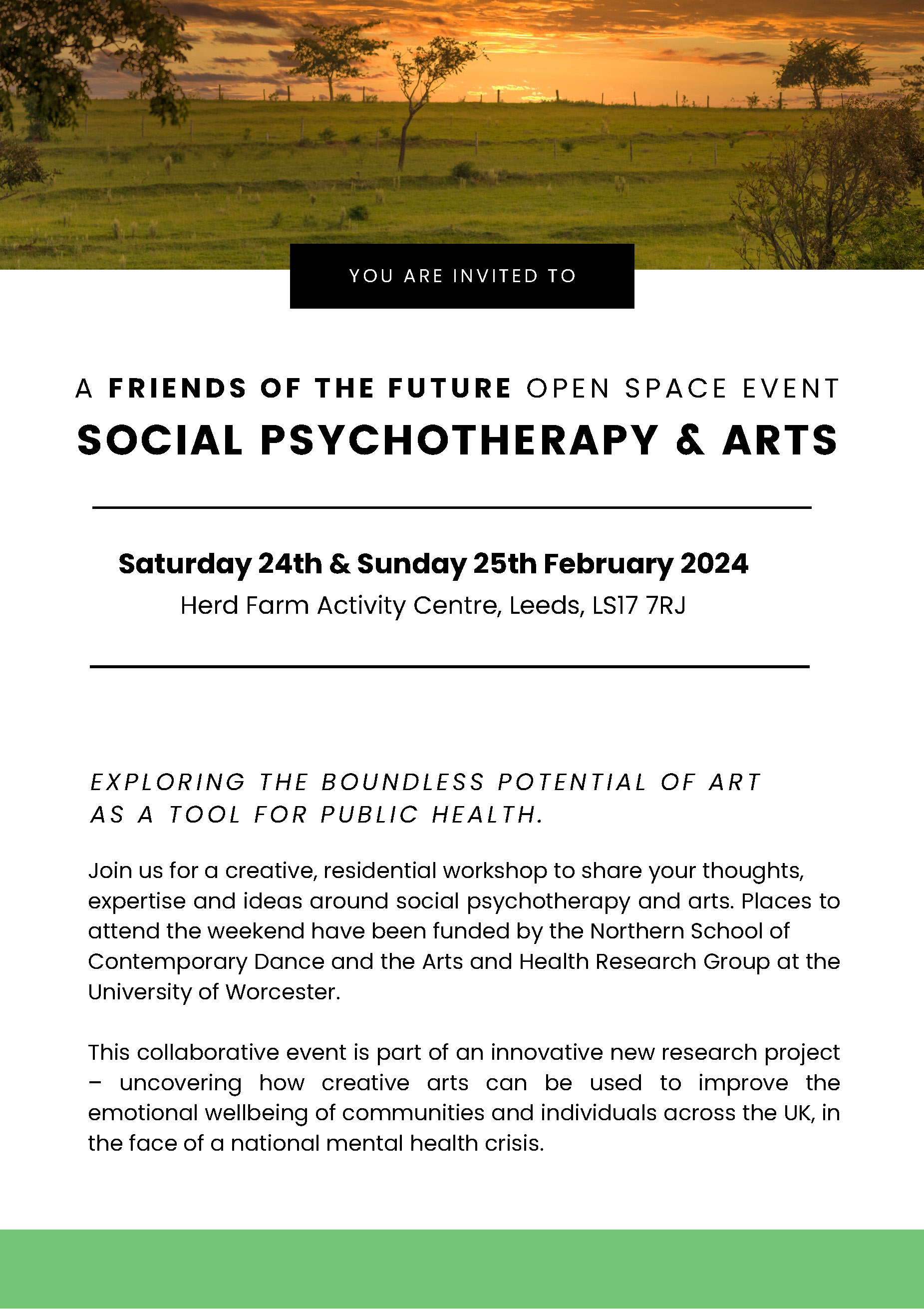
Friends of the Future at Herd Farm 24-25th Feb

Along with colleagues from Friends of the Future and the Arts and Health Research Group at the University of Worcester, I’ve coordinated an Open Space event at Herd Farm in Leeds on the 24th and 25th Feb that will respond to the following prompts:

  • Where do art and therapy start and end?
  • What is the meaning of integrity for artistic and therapeutic practices?
  • How might psychotherapists (arts-based or otherwise), creative health practitioners and socially-engaged artists work together on large-scale public health projects?

The event has been developed in collaboration with the Northern School of Contemporary Dance.

The events is free but places are limited, particularly from the overnight accommodation.

More information below.

Please book your place here.

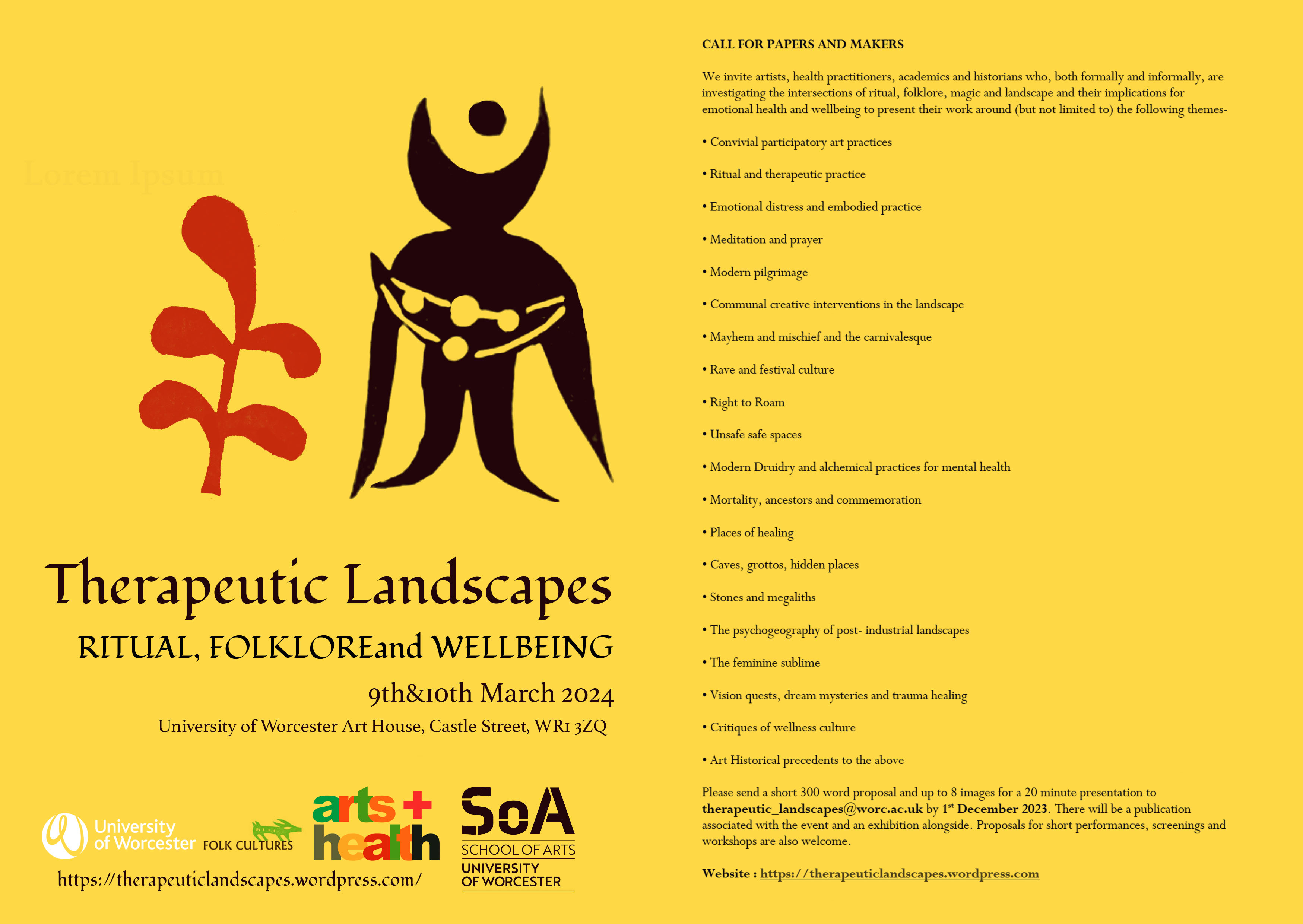
Therapeutic Landscapes: Call for Papers

Below is the call for papers for Therapeutic Landscapes: Ritual, Folklore and Wellbeing, a two-day event taking place at the Art House in Worcester on the 9th and 10th of March 2024. It has been organised by Desdemona McCannon of the Folk Cultures Special Interest Group at the University of Worcester and myself as leader of the Arts and Health Research Group there. It will be accompanied by an exhibition at the Art House and a publication.

300 word proposals for 20 minute presentations should be sent to therapeutic_landscapes@worc.ac.uk by December 1st.

Please share the call with your networks.