We will be launching our book Drawing Analogies: Diagrams in Art, Theory and Practice at The Gallery, Slade School of Fine Art, UCL, Gower Street, London, WC1E 6BT on Thursday May 1st at 18.00.
The launch will be accompanied by invited academics presenting on their research and discussing diagrams with the Diagram Research Group.
The invited academics are:
Dr. Winnie Soon, artist & Director of UG Art & Technology (Slade School of Fine Art UCL
Duncan Greig, Professor of Genetics (Centre of Life’s Origins and Evolution/CLOE)
Martin Holbraad, Professor of Anthropology (UCL Anthropology)
Drawing Analogies is published by Bloomsbury Press as part of the ‘Drawing In’ series as a hardback book and open access publication that can be downloaded here.
There will be refreshments. For information and attendance e-mail David Burrows: d.burrows@ucl.ac.uk
I’m genuinely honoured to be giving my paper ‘This Is Not a Diagram: Applying General Semantics to Contemporary Arts Pedagogy’ at the forthcoming online symposium of the Institute of General Semantics – Communication, Consciousness, and Culture II – on Saturday 19th April. The event is free and open to all but registration is required.
For those not familiar with the discipline of General Semantics, this is the perfect opportunity to learn about it. There is an incredible line up of speakers and it promises to be a very special event.
My panel – ‘Map and Territory’ – will run from 12.30 – 13.45 pm GMT.
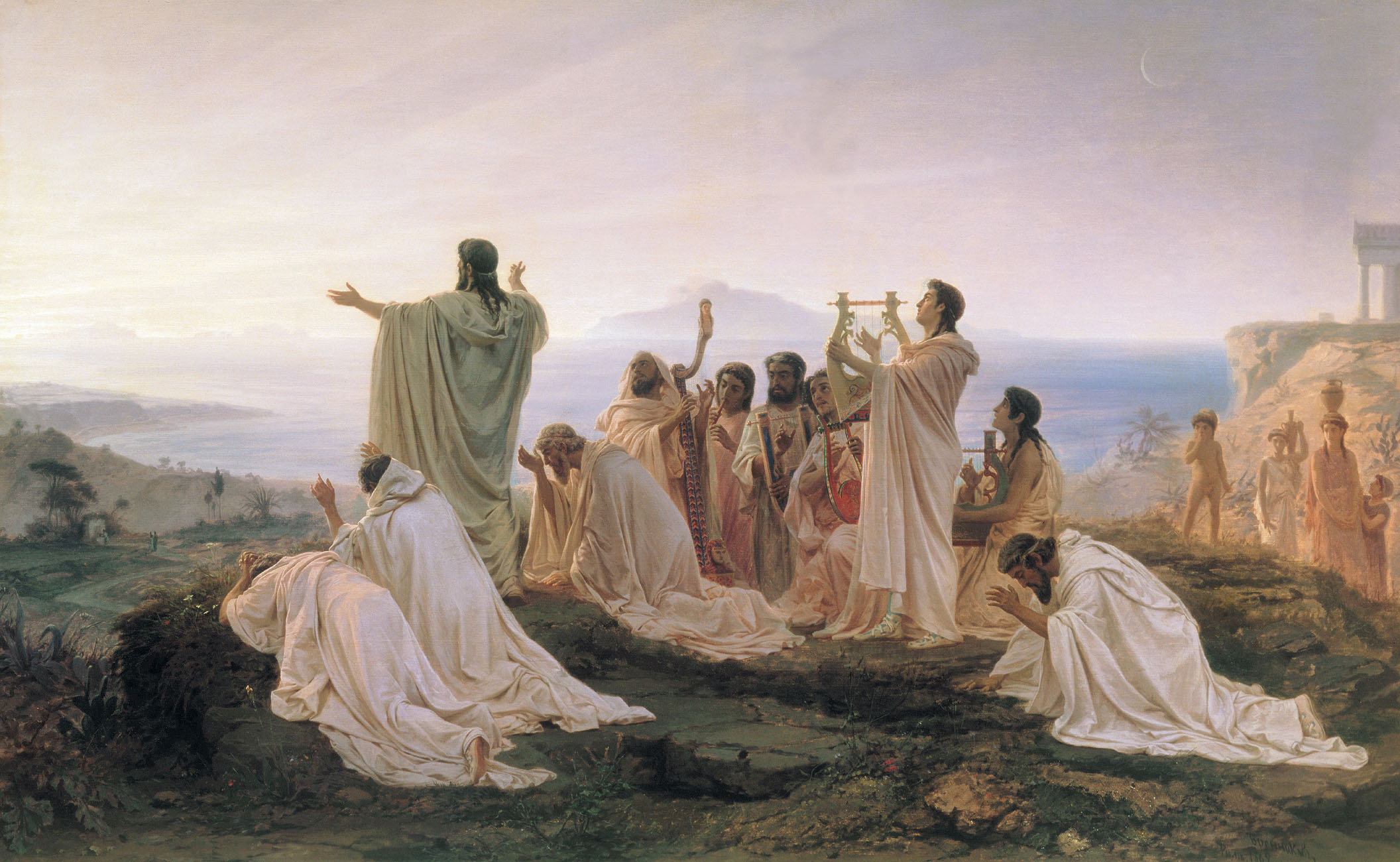
Fyodor Bronnikov Pythagoreans Celebrate the Sunrise 1869
Below is PDF of my presentation ‘Reimagining Arts Education: From the Education of the Senses to Creative Health ‘ which I gave at the Have Some Imagination: Towards a Manifesto for Arts Education conference at theBaltic Centre for Contemporary Art in Newcastle in February.
My new book Drawing Analogies: Diagrams in Art, Theory and Practice, co-authored with David Burrows, Dean Kenning and Mary Yacoob, is available as Open Access here. The print edition will be available to buy here from 6th Feb 2025.
Informed by Charles Sanders Peirce’s understanding of a diagram as an analogy of relations, Drawing Analogies draws on its authors’ creative use of diagrams as artists, educators and arts researchers, and on fields of inquiry that bring the arts into alignment with other disciplines, most notably anthropology, critical theory, pedagogy, philosophy, psychology, semiotics and the physical and life sciences.
By taking an artistic approach to diagrams and diagramming, by incorporating diagramming as a method of enquiry within chapters, and by exploring their interdisciplinary and multi-perspectival potentials, Drawing Analogies proposes giving new life to the art of diagramming and widening the arena of artistic practice and creative research.
David Burrows, Dean Kenning and Mary Yacoob will be discussing our forthcoming book Drawing Analogies: Diagrams in Art, Theory and Practice at The Photographers’ Gallery on Tuesday June 25th between 6.30 and 8 pm. The event is free but limited. Places can be booked here.
Below is an edited transcript of a talk I gave at the first DRUGG (Diagram Research, Use and Generation Group) gathering at University College London on July 14th and 15th 2012.
Fred Astaire and Hermes Pan, RKO Publicity Shot (1939)
Introduction
Diagrams play a fundamental role in the art of teaching, helping people do and understand things in ways that differ from and complement other teaching methods. Diagrams can be defined as visualisations of non-apparent systems, concepts, relationships, processes and ideas. They help students to recognise and understand parallels and structural correlations between things in the world; their constitutive natures; their internal structures; relationships; the systems of which they form a part; the processes they are involved with; their own physicality and subjectivity; the coming-into-being of all of these through time and space; and theoretical explanations for these becomings.
As visual and drawn objects with a pedagogical function, one might expect diagrams and diagramming to be established institutional objects and practices in art and design education. This is however rarely the case. Although diagrams and diagramming are often used in lectures, as tutorial aids and in student notebooks, they are seldom addressed in art education on their own terms. Having taught art theory and academic writing to art and design students for many years now, I have found them increasingly useful as teaching tools, particularly for helping students see and understand relationships between philosophical concepts, art theory, art making, thinking and writing.
Later I will try to construct a practical, systematic schematisation of diagrams. But for now I will simply include ‘diagrams’, ‘analogies’, ‘allegories’, ‘maps’, ‘plans’ ‘models’, ‘schema’, ‘pictograms’ and ‘technical illustrations’ in the category of things we might conveniently describe as diagrammatic. Generally they all combine, in an ostensibly unitary form, words, pictures, lines, figures, shapes, numerals, forms, axis, grids and tables. The diagrammatic in this sense is can be characterised by the following attributes: (1) graphic visualisation, (2) an economy of graphic means that minimise extraneous information (3) a high-level of representational and conceptual abstraction, (4) the representation of non-apparent systems and relations and (5) a generally didactic purpose. Later we will see that some of the key philosophers concerned with the diagrammatic depart significantly from this signifying, purposive and didactic schematisation.




 Invisible Mirrors